

Ceramic Rich Composite Electrolytes: An Overview of Paradigm Shift toward Solid Electrolytes for High-Performance Lithium-Metal Batteries
This review paper presents a comprehensive overview of the paradigm shift toward solid electrolytes for high-performance solid-state lithium-metal batteries (SSLMBs). Focusing on polymer-in-ceramic (PIC) composite electrolytes, it examines the synergy of combining flexible organic polymer hosts with high-concentration active inorganic fillers. The paper details fundamental mechanisms of ionic conduction in PIC versus ceramic-in-polymer (CIP) structures, outlines diverse fabrication methodologies, and evaluates recent material advancements. Furthermore, it highlights interface modification strategies and outlines future prospects to overcome ongoing challenges and accelerate the practical commercialization of next-generation batteries.
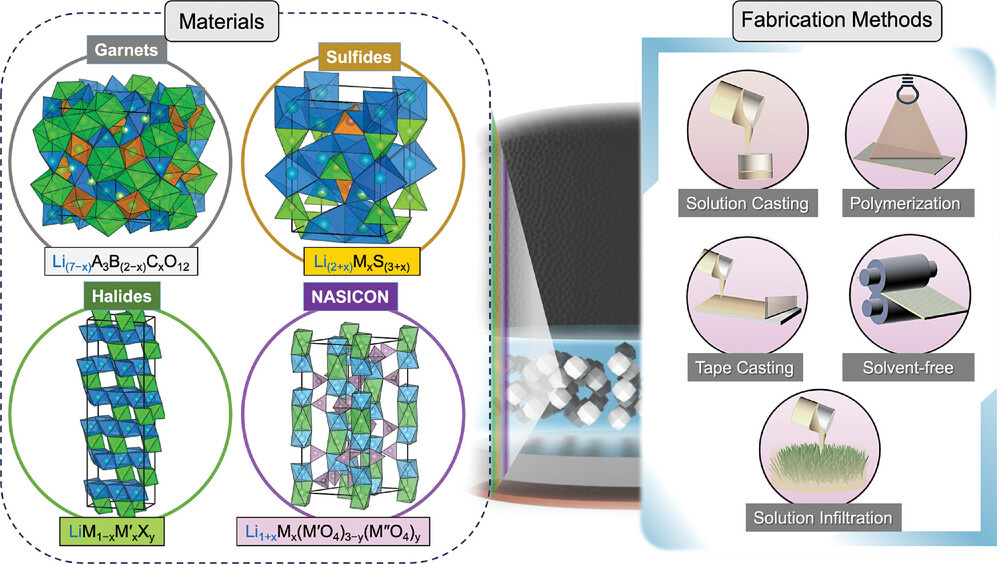
Fig. 1. Schematic illustration of an overview of polymer‐in‐ceramic–based composite electrolytes.
Technology Overview
Polymer-in-ceramic (PIC) technology utilizes composite electrolytes where the active inorganic ceramic filler exceeds 50 wt% of the total mass. This high concentration allows lithium ions to migrate rapidly through continuous, interconnected percolation networks of ceramic particles. Concurrently, minor organic polymer phases or binders are integrated to introduce viscoelasticity, reducing the overall brittleness of pure ceramic systems.
Applications & Benefits
This technology is mainly applied in high-energy-density solid-state lithium-metal batteries (SSLMBs) for electric vehicles and portable electronics. The key benefit of PIC electrolytes lies in balancing safety and performance; the ceramic network provides superb mechanical strength to suppress lithium dendrite growth and prevent short circuits, while the polymer host ensures flexible, thin-film processability and excellent electrode contact.
Abstract:
Exploiting the synergy between organic polymer electrolytes and inorganic electrolytes via the development of composite electrolytes can suggest solutions to the current challenges of next-generation solid-state lithium-metal batteries (SSLMBs). Depending upon a mass fraction of inorganic fillers and organic polymers, composite electrolytes are broadly classified into “ceramic-in-polymer” (CIP) and “polymer-in-ceramic” (PIC) categories, inheriting distinct structure and electrochemical properties. Since the stability and electrochemical characteristics of the inorganic phase are superior to those of the organic phase for lithium-ion conduction, applying lithium-enrich active filler in PIC seems more promising. The inorganic phase preserves the primary migratory channels in the PIC electrolyte, while the viscoelastic properties attempt to be introduced from the organic binder or host. The present work overviews the studies on state-of-the-art PIC electrolytes, the fundamental mechanism of ionic conduction, preparation methods, and current progress in materials development for SSLMBs. In addition, the modification strategies for improving the electrode–electrolyte interface are also emphasized. Moreover, it further prospects the current challenges and effective strategies for the future development of PICs-based CPEs to accelerate the practical application of SSLMBs. This review examines the progress and outlook of PIC-based electrolytes for next-generation lithium batteries.
Ceramic Rich Composite Electrolytes: An Overview of Paradigm Shift toward Solid Electrolytes for High-Performance Lithium-Metal Batteries
Author:Maurya Dheeraj Kumar, Bazri Behrouz, Srivastava Pavitra, Huang Jheng-Yi, Hung Yuan-Ting, Huang Wen-Tse, Wei Da-Hua, Liu Ru-Shi
Year:2024
Source publication: Advanced Energy Materials, Volume 14, Issue 43, Nov 2024
Subfield Highest percentage: 99% General Materials Science #5/460