

Heterostructures of 2D materials and their applications in biosensing
In this review, a specific outlook of the 2D heterostructures influencing biosensor has been discussed and has been split into five main sections. The starting section introduces 2D materials, 2D heterostructures, electrochemical sensors, and biosensors. The second section describes the commonly used 2D materials for the fabrication of heterostructures, while the synthesis, characterizations, and properties of 2D heterostructures will be discussed elaborately in the third section. Furthermore, different 2D heterostructures and their performance in the biosensing application will be discussed clearly in the fourth section. Finally, the challenges and future perspectives of the 2D heterostructure-based biosensors are discussed in the concluding section.
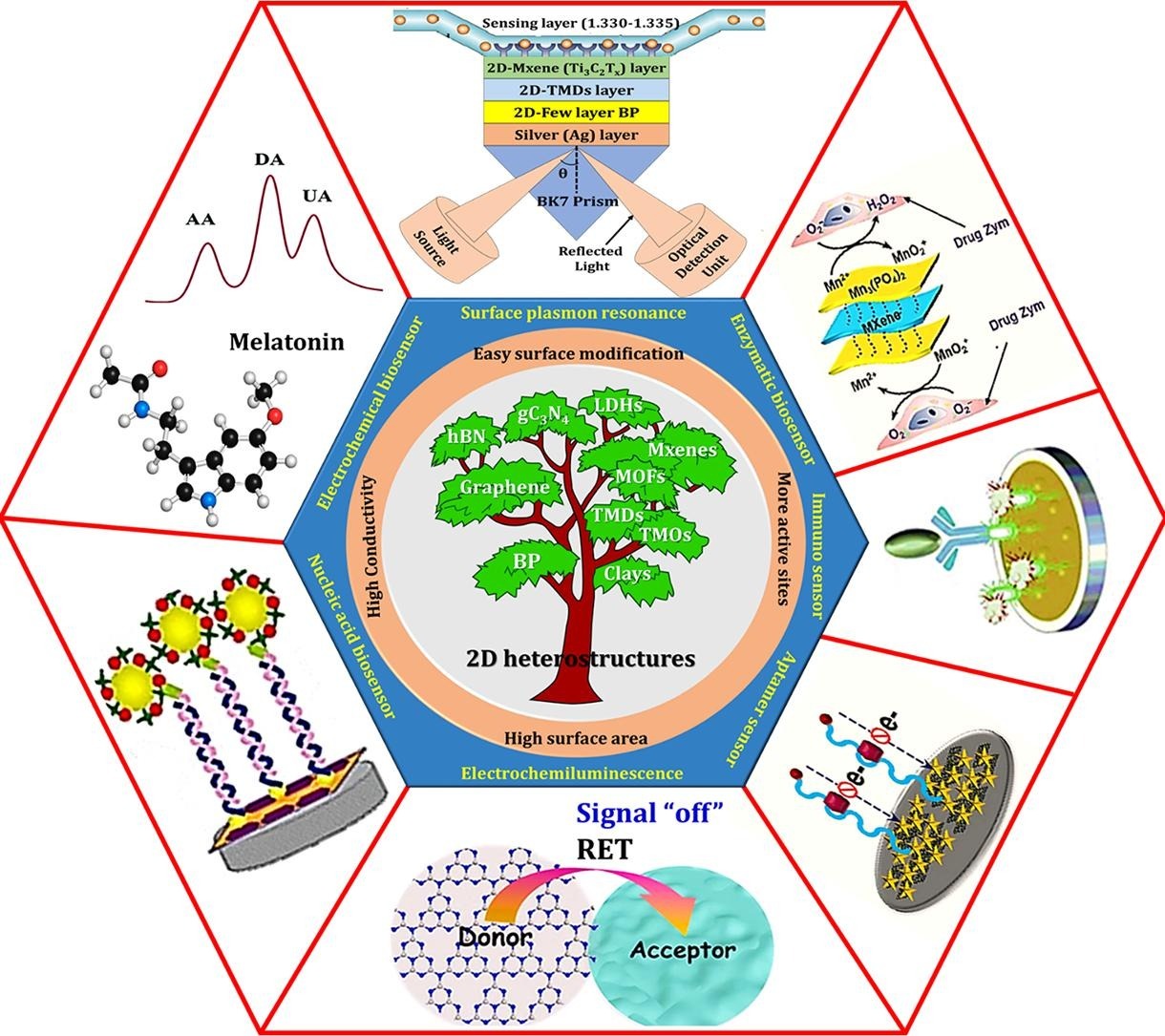
Fig. 7. Schematic representation of 2D heterostructures used in various biosensing applications.
Technology Overview
Synthesis, characterization, and properties of the 2D heterostructures are summarized. The working principles, types, and techniques used for biosensor fabrications are studied. Different 2D heterostructured and their performance in biosensors are reviewed. Current challenges and future perspectives of the 2D heterostructures are highlighted.
Applications & Benefits
In conclusion, we have summarized the state-of-the-art 2D heterostructures and their utilizations as electrodes in biosensing applications. We presented the significant achievements reported to date and highlighted important future directions based on the rational and facile design of 2D heterostructures for biosensing applications. We believe that this review can play a vital role in developing biomedical applications using 2D heterostructures for the foreseeable future.
Abstract:
Heterostructures of two-dimensional (2D) materials have attracted attention due to their structures and multifunctional interfacial characteristics. The unique properties of these heterostructures are primarily due to electronic structure modification (Fermi energy level, the density of states, synergetic work function, and so on) at the interface. The high transparency, atomic thickness, vast specific area, exceptional optical/electrical properties, and additional biocompatibility of 2D heterostructure materials and their application as various biosensors, including electrochemical, surface plasma resonance, immunosensor, photoelectrochemical, nucleic acid-based, enzyme-based, aptamer, protein-based, and electrochemiluminescent biosensors. Finally, the synthesis strategies, physicochemical properties, fabrication, working mechanism, and performances of these 2D heterostructured material-based biosensors are discussed. The current challenges and future perspectives of this study are highlighted. This review will encourage innovative visions and technical advances for upcoming research.

Heterostructures of 2D materials and their applications in biosensing
Author:Rajalakshmi Sakthivel, Murugan Keerthi, Ren-Jei Chung, Jr-Hau He
Year:2023
Source publication:Progress in Materials Science Volume 132, February, 2023
Subfield Highest percentage:99% General Materials Science # 1 / 453
https://www.sciencedirect.com/science/article/pii/S0079642522001050