

A cost-reliability trade-off analysis for maintainable multistate flow networks with preventive and corrective maintenance
This study proposes a comprehensive framework for evaluating cost and reliability trade-offs in maintainable multistate flow networks (MMFNs). In practical systems, components often exhibit multiple capacity states due to degradation and maintenance. To address the challenge of balancing sufficient operational capacity with minimized maintenance expenditures, the researcher integrates both preventive and corrective maintenance strategies into the network model. By utilizing minimal capacity vectors, the framework derives lower and upper bounds of system reliability under strict budget constraints. This approach successfully provides a systematic decision-making tool for optimizing structural reliability and resource allocation in complex infrastructure networks.
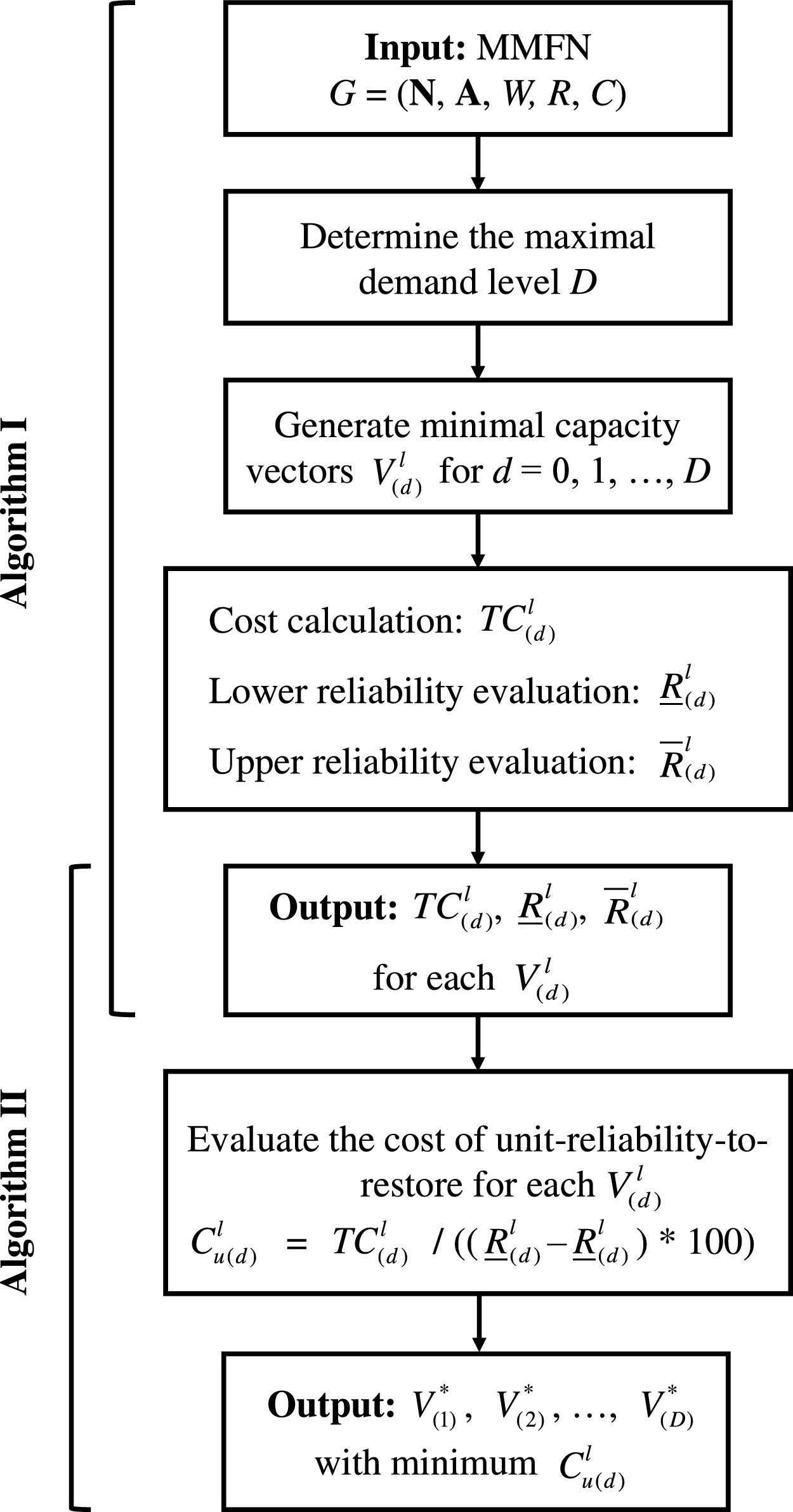
Fig. 1. Flowchart of the developed algorithms.
Technology Overview
The technology establishes a mathematical model for MMFNs that incorporates probabilistic capacities influenced by preventive and corrective maintenance. Methodologically, it determines the minimal capacity vectors capable of satisfying specific flow demands under a fixed budget. By analyzing the expected and restored capacity configurations of network arcs and nodes, the algorithm efficiently calculates both the upper and lower bounds of system reliability.
Applications & Benefits
This research applies to logistics, telecommunication systems, power grids, and urban transit network management. It provides significant practical benefits by enabling operators to achieve an optimal balance between maintenance costs and service quality. Ultimately, it enhances the resilience of critical infrastructure, prevents catastrophic system failures, and maximizes cost-efficiency in infrastructure lifecycle management.
Abstract:
This study proposes a comprehensive framework for evaluating cost and reliability trade-offs in maintainable multistate flow networks (MMFNs) by considering preventive and corrective maintenance. In practical systems, subsystems (arcs and nodes) in a network may exhibit multiple capacity states (i.e., multistate) due to maintenance, failures, and capacity usage, making it essential to reserve sufficient capacity while minimizing maintenance expenditures. The proposed model integrates maintenance costs and demand levels to generate minimal capacity vectors that satisfy service requirements under budget constraints. For each demand level, both the lower and upper bounds of system reliability are derived by analyzing the expected capacity and the restored capacity after maintenance. Additionally, a performance indicator, cost of unit-reliability-to-restore, is introduced to determine an economical maintenance strategy that balances reliability and cost. A pair of illustrative examples of power transmission and computer networks demonstrate the applicability of the proposed method and highlight the decision-making insights. The results show that the most effective maintenance strategy is not necessarily the one with the lowest cost, but rather the one that achieves the best trade-off between restored reliability and total expenditure.

A cost-reliability trade-off analysis for maintainable multistate flow networks with preventive and corrective maintenance
Author:Chang, Ping-Chen
Year:2026
Source publication: Reliability Engineering & System Safety, Volume 269, May 2026, 112088
Subfield Highest percentage: 99% Safety, Risk, Reliability and Quality #2/282