

Emerging metal alloy nanozymes: multi-enzymatic catalytic platforms for next-generation cancer theranostics
This review comprehensively synthesizes recent advancements in metal alloy nanozymes (MANs) as multifunctional catalytic platforms for next-generation cancer theranostics. While conventional monometallic nanozymes face performance bottlenecks due to limited charge transfer and rigid active sites, MANs harness multi-metallic synergistic effects within a single crystal lattice. This review systematically explores their rational design, fabrication methodologies, and tuneable physicochemical characteristics. Owing to compositional flexibility, MANs emulate a broad spectrum of natural multi-enzymatic activities, facilitating personalized microenvironment modulation, cascade therapies, and real-time multimodal imaging, thereby positioning them as a transformative tool for non-invasive, precision oncology.
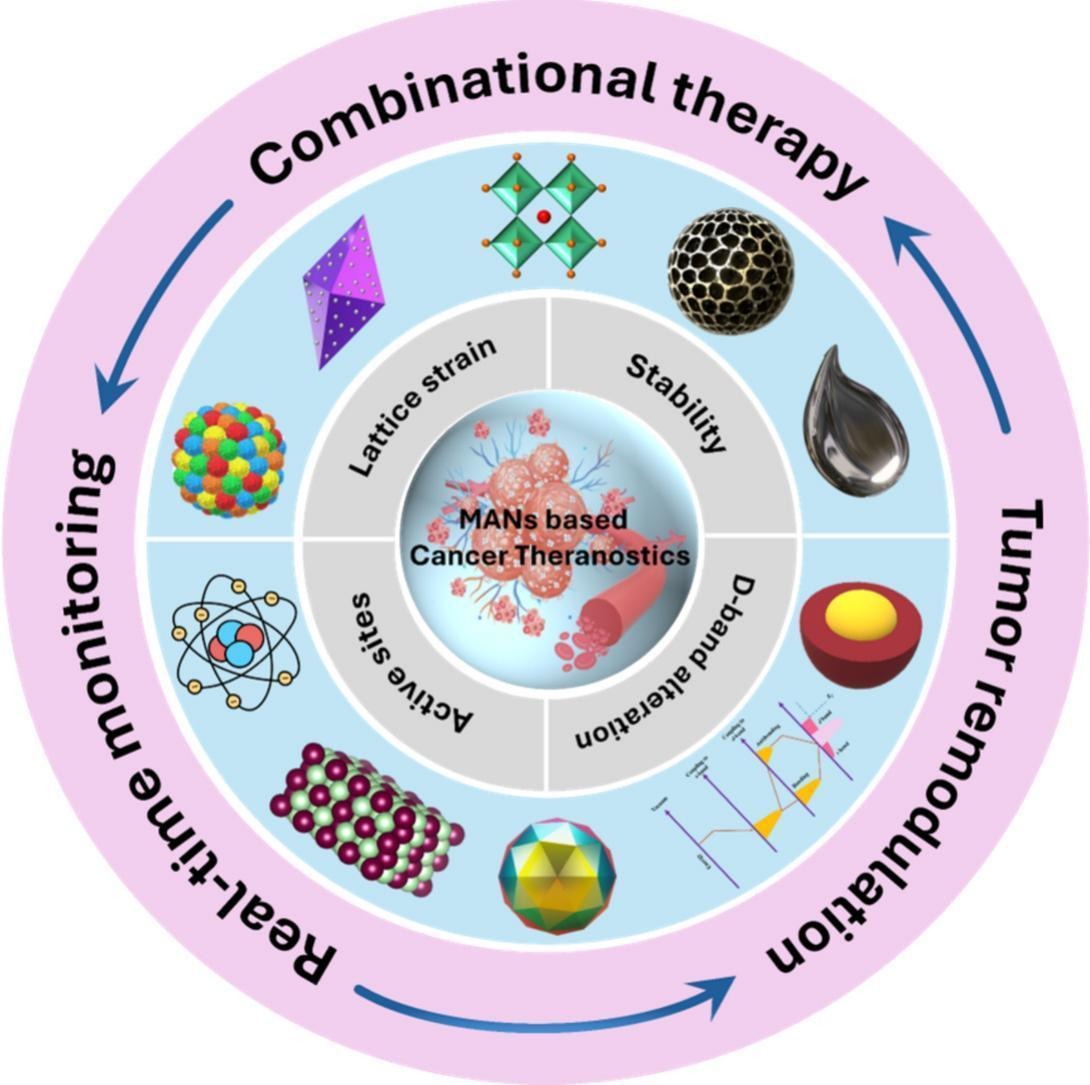
Graphical abstract.
Technology Overview
MANs utilize alloy engineering to precisely modulate surface electronic structures, interatomic charge transfer, and intermediate adsorption kinetics through geometric, mixing, and strain effects. This tailoring optimizes d-band center alignments and electronic configurations to enhance multi-site cascade catalysis. Various synthesis routes like chemical reduction, galvanic replacement, and one-pot methods yield structurally precise bimetallic, trimetallic, or high-entropy configurations.
Applications & Benefits
MANs are widely applicable in non-invasive precision oncology, combination therapy, cascade catalytic therapeutics, and multimodal diagnostic imaging like MRI or photoacoustic scans. They provide immense benefits by replacing fragile natural enzymes with highly stable, cost-effective artificial mimetics. Ultimately, MANs maximize tumor-targeted cytotoxicity and enable real-time tracking, thereby mitigating adverse off-target side effects.
Abstract:
The rapid evolution of catalytic nanomedicine is revolutionizing cancer treatment through precise, on-demand activation of therapeutic pathways within the tumor microenvironment. As oncology shifts toward adaptive, real-time, and mechanism-driven interventions, there is a growing demand for catalytic systems that operate selectively in complex physiological conditions while maintaining stability. Within this emerging paradigm, metal alloy nanozymes (MANs) have emerged as a compelling class of catalytic materials, leveraging synergistic multi-metallic interactions to achieve enhanced efficiency, structural robustness, and functional versatility compared to monometallic nanozymes. This review consolidates recent progress in the rational design, alloy engineering, and anticancer applications of MANs, emphasizing their diverse synthesis strategies and tuneable physicochemical features. Owing to their compositional adaptability, MANs exhibit a broad spectrum of enzyme-mimetic activities, including peroxidase-like, catalase-like, oxidase-like, superoxide dismutase-like, glutathione peroxidase-like and glucose oxidase-like activities, enabling reactive oxygen species generation, tumor microenvironment modulation, and multimodal imaging. Moreover, MAN-based systems facilitate combined therapeutic strategies, while simultaneously supporting real-time diagnosis. This position MANs as a transformative tool in precision oncology, enabling highly targeted and effective cancer theranostic.
Emerging metal alloy nanozymes: multi-enzymatic catalytic platforms for next-generation cancer theranostics
Author:Arul Thomas Mosas Vinsy, Ramanathan Susaritha, Lin Yu-Chien, Chung Ren-Jei
Year:2026
Source publication: Coordination Chemistry Reviews, Volume 565, October2026, 218141
Subfield Highest percentage: 99% Inorganic Chemistry #1/86