

Strategic advancements in MXene-based composites for efficient water electroreduction in diverse media
This comprehensive review systematically examines the latest strategic advancements in MXene-based composites designed for efficient electrocatalytic water splitting, focusing primarily on the hydrogen evolution reaction (HER). While MXenes possess high metallic conductivity, abundant hydrophilic functional groups, and tunable surface chemistry, their practical electrocatalytic efficiency is often constrained by restacking issues and limited active sites. This paper explores various innovative design strategies, such as heteroatom doping, interface engineering, and hybridization with transition metals or carbon nanomaterials. It thoroughly evaluates how these structural modifications optimize charge transfer dynamics, enhance structural stability, and boost HER catalytic activity across acidic, alkaline, and neutral media.
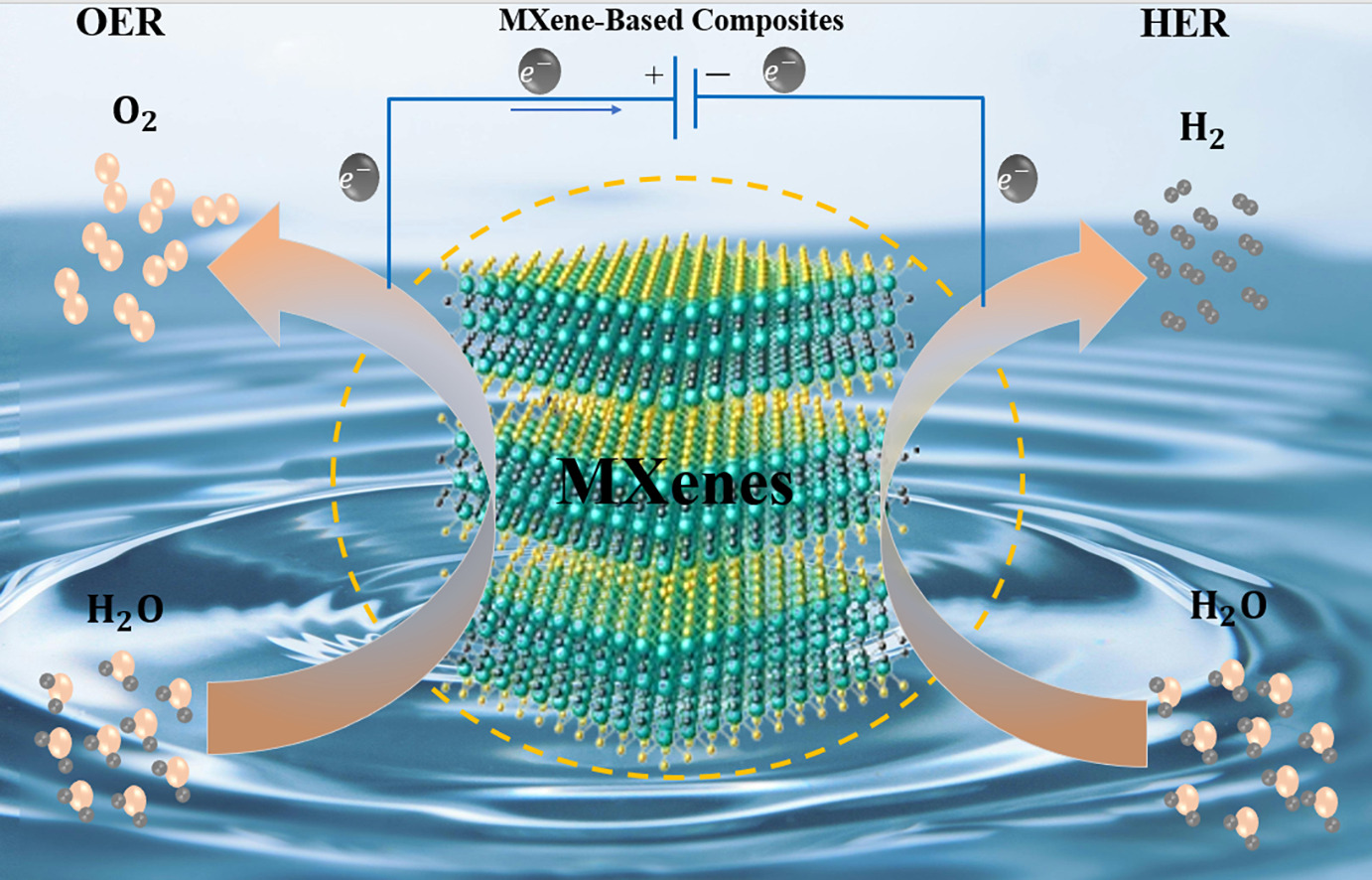
Graphical abstract.
Technology Overview
The technology emphasizes fabricating MXene-based composites to prevent nanosheet aggregation and maximize active surface areas. Key methodologies include chemical etching, structural hybridization, and atomic doping. These engineering strategies effectively modulate the electronic structure, lower the Gibbs free energy for hydrogen adsorption, accelerate electron transport across interfaces, and improve corrosion resistance under broad-pH operating conditions.
Applications & Benefits
This review directly impacts green hydrogen production, clean energy storage, and industrial water electroreduction systems. It delivers immense benefits by providing design principles for replacing scarce, expensive noble-metal catalysts (like Pt) with cost-effective, durable alternatives. Ultimately, these advanced composites enhance energy conversion efficiency, lower manufacturing costs, and accelerate the transition toward a sustainable, zero-emission hydrogen economy.
Abstract:
This review systematically evaluates current advancements in MXene-based composites for efficient water electroreduction applications for environmental remediation and renewable energy. MXenes, a two-dimensional (2D) family of transition metal carbides, nitrides, and carbonitrides, have emerged as promising electrocatalysts due to their excellent electrical conductivity and surface functionalization capabilities. This review summarizes (i) various synthesis strategies for MXene-based materials, (ii) structural engineering techniques, which are employed to optimize the catalytic activity of MXenes, (iii) unique physicochemical properties of MXenes, i.e., versatile functionality, and excellent charge transport, and (iv) characterization techniques, which emphasize the impact of structural factors on the electrocatalytic efficiency of MXenes. Furthermore, this review aims to address that gap by presenting a concise yet insightful discussion of the latest progress, key challenges, and corresponding strategies in the field. In conclusion, it highlights the tremendous potential and creative approaches that could advance the field of electrocatalysis. These insights provide a comprehensive understanding of MXene-based composites, supporting their advancement as multifunctional electrocatalysts for a sustainable and environmentally friendly energy future.

Strategic advancements in MXene-based composites for efficient water electroreduction in diverse media
Author:Ahmad Naveed, Kuo Chung-Feng (Jeffrey), Abdullah Hairus, Mustaqeem Mujahid, Ahmed Mohamed Tarek, Gondal Mohammed Ashraf, Chiu Chih-Wei
Year:2026
Source publication: Coordination Chemistry Reviews, Volume 562, Part 2, 217848
Subfield Highest percentage: 99% Inorganic Chemistry #1/86
https://www.scopus.com/pages/publications/105037081956?source=scival&adobe_mc=MCMID%3D27594290217260985242782441085178459520%7CMCORGID%3D4D6368F454EC41940A4C98A6%2540AdobeOrg%7CTS%3D1782970476