

Atomic-Level CuOx-CoOx-Pd Interfacial Engineering Enables Hierarchical Synergy for High-Efficiency ORR Pathways and Boosted Power Output in Alkaline Fuel Cells
This study addresses the critical challenge of enhancing the oxygen reduction reaction (ORR) efficiency in alkaline fuel cells without relying heavily on scarce platinum-group catalysts. The researchers successfully develop an advanced tri-metallic electrocatalyst utilizing atomic-level interface engineering to construct a unique CuOx-CoOx-Pd heterostructure. This structure facilitates a highly efficient, multi-step hierarchical synergistic effect among the distinct oxide and metal phases. The strategic interfacial design significantly optimizes the adsorption kinetics of oxygen intermediates and dramatically accelerates overall electron transfer, leading to an exceptionally boosted power output and superior long-term durability in practical alkaline fuel cell applications.
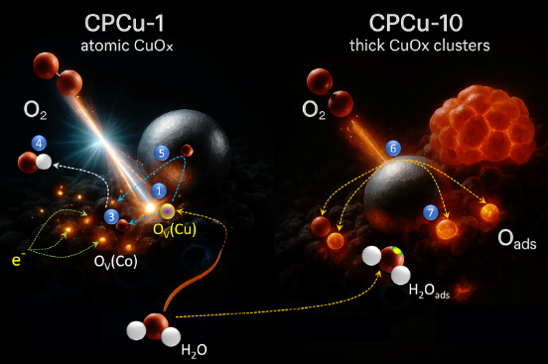
SCHEME 1 Schematic representation for the reaction pathways of CPCu-1 and CPCu-10 in ORR.
Technology Overview
The technology introduces an atomic-level interfacial engineering approach to synthesize a hierarchical CuOx-CoOx-Pd electrocatalyst. By precisely configuring the sub-nanometer interfaces between copper oxides, cobalt oxides, and palladium, the system creates localized coordination networks. This electronic modulation lowers the activation energy for O2 cleavage, mitigates the energy barriers of intermediate desorption, and promotes a highly selective four-electron ORR pathway.
Applications & Benefits
This innovation directly impacts alkaline fuel cells (AFCs), zinc-air batteries, sustainable power generation, and advanced chemical engineering fields. It delivers profound economic and technical benefits by substituting expensive platinum benchmarks with a highly active, durable, and low-cost alternative. Ultimately, it increases maximum power output density, prevents catalyst degradation, and advances the commercial viability of clean, zero-emission energy technologies.
Abstract:
The sluggish kinetics of the oxygen reduction reaction (ORR) and the high cost of Pt-based catalysts remain major barriers for alkaline fuel cell (AFC) technologies. Here we report a Cu-decorated CoO@Pd catalyst in which atomic-to-subnanometer CuOx species reconstruct the Pd-Co-Cu heterointerface and enable a cooperative multi-site ORR pathway. Structural and spectroscopic analyses reveal that low Cu loading produces atomically dispersed CuOx motifs that enrich oxygen vacancies (OV)s, preserve metallic Pd, and stabilize oxygen-deficient Co3+ centers. Operando PFY-XANES/EXAFS further uncovers a synergistic mechanism in which OVs around Cu serve as rapid O2 activation sites, Pd mediates lateral *Oads spillover, and OVs around Co act as the primary *Oads reduction centers. This division of labor maximizes four-electron ORR kinetics, yielding a on-set potential of 0.935 V and a mass activity (MA) of ∼1.6 × 10⁴ mA mgCu−1 without decay for 50k potential cycles, surpassing commercial Pt/C by over two orders of magnitude. When integrated into AFCs, the optimized catalyst (CPCu-1) delivers a peak power density of ∼430 mW cm−2, approximately 60% higher than Pt/C, and exhibits a characteristic three-stage durability governed by dynamic CuOx-CoOx interface reconstruction. These findings establish atomic CuOx interface engineering strategy for designing high-performance, noble-metal-efficient ORR catalysts.
Atomic-Level CuOx-CoOx-Pd Interfacial Engineering Enables Hierarchical Synergy for High-Efficiency ORR Pathways and Boosted Power Output in Alkaline Fuel Cells
Author:Hsu Yang-Yang, Fan Ching-Hua, Wang Kuan-Wen, Wang Kuang-Kuo, Hiraoka Nozomu, Ishii Hirofumi, Chan Ting-Shan, Chen Po-Chun, Chen Tsan-Yao
Year:2026
Source publication: Advanced Science. 2026:e76006. DOI: 10.1002/advs.76006
Subfield Highest percentage: 99% Biochemistry, Genetics and Molecular Biology #1/144