

Utilizing VR technology with remote medical guidance for distant collaborative emergency medical training in advanced cardiac life support
This study addresses the critical challenge of conducting high-fidelity Advanced Cardiac Life Support (ACLS) training under geographical constraints. Traditional simulation methods require physical proximity and expensive resources, limiting widespread accessibility. To overcome these barriers, the researchers developed an innovative distance-collaborative emergency medical training platform. The system integrates immersive Virtual Reality (VR) technology with a real-time, remote medical guidance framework. This configuration enables geographically dispersed healthcare professionals and trainees to synchronously enter a shared virtual emergency room, perform complex clinical workflows collaboratively, and receive immediate expert feedback, thereby significantly enhancing cognitive knowledge retention, team coordination, and procedural competence in critical care.
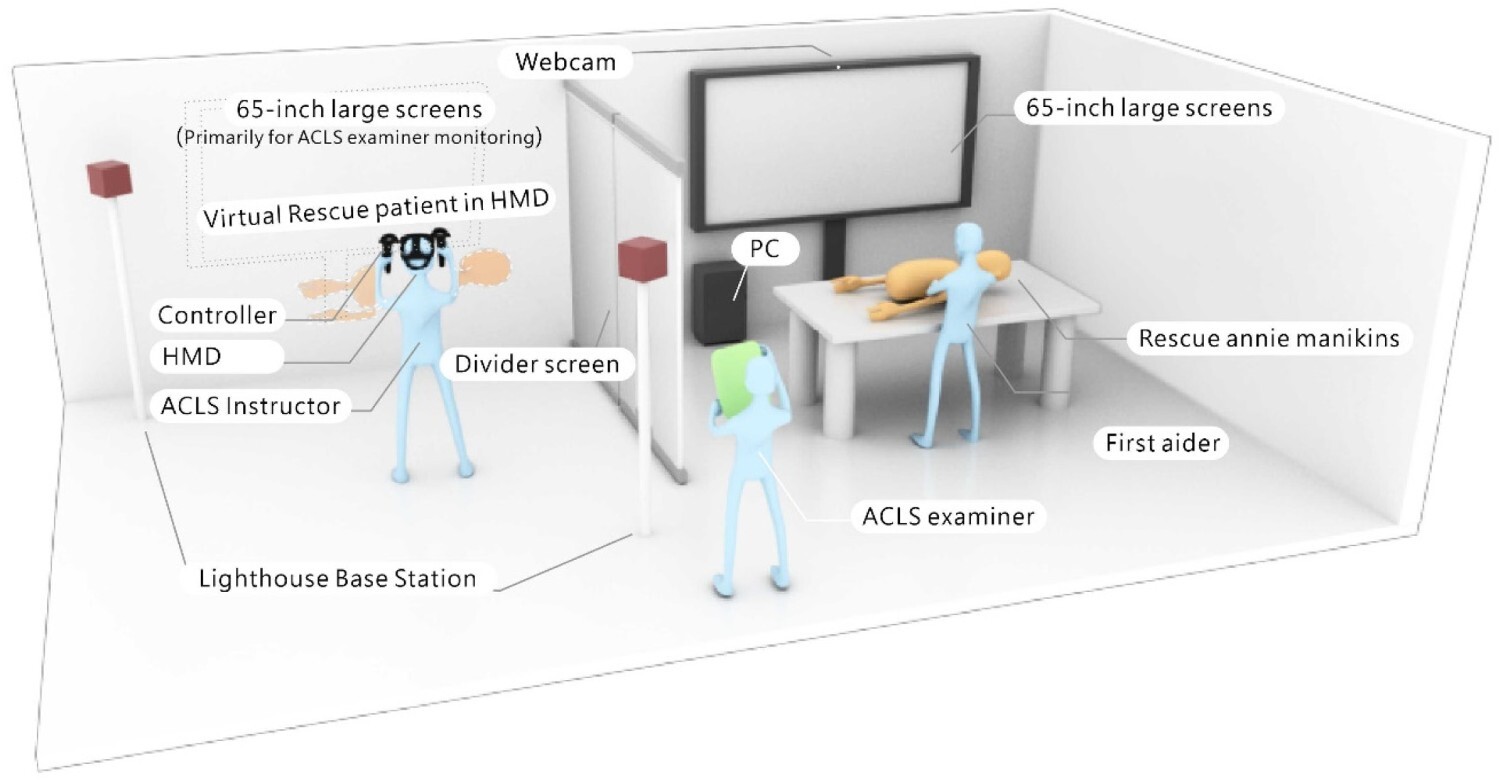
Figure 3. Implementation of the VR-ACLS remote medical guidance strategy by the experimental group.
Technology Overview
The technology combines network-synchronized VR environments with interactive multi-user simulation software tailored for ACLS protocols. Methodologically, it pairs high-immersion VR hardware with a low-latency remote guidance system. This platform allows distributed participants to co-presence in a virtual resuscitation bay, manipulate interactive medical equipment, execute collaborative diagnostic and treatment algorithms, and receive dynamic assessment from a remote instructor during simulated cardiac emergencies.
Applications & Benefits
This innovation is highly applicable to emergency medicine residency, nursing education, military medicine, and rural healthcare training networks. It delivers profound benefits by eliminating travel costs and minimizing the physical resource constraints of traditional medical simulation. Ultimately, it expands high-quality resuscitation education accessibility, improves interprofessional teamwork, and enhances clinical preparedness to save lives in real-world cardiac emergencies.
Abstract:
This study applied a virtual reality (VR)-based Advanced Cardiovascular Life Support (ACLS) remote guidance system, created by the authors, to remote medical instruction. Experiments were conducted with both this system and traditional video-based instruction to evaluate differences in emergency response performance. After expert review, 31 licensed nurses were recruited and randomly assigned to an experimental group (n = 16) using the VR-ACLS system or a control group (n = 15) using videobased guidance. Both groups completed two-person remote emergency collaboration tasks, and performance was evaluated based on task completion and correct execution rates under instructor guidance. The experimental group achieved a 37.5% completion rate and a 37.5% correct execution rate, while the control group scored 6.7% on both. Independent sample t-tests revealed statistically significant differences (p < 0.05) favoring the VR-ACLS strategy. Results confirmed the effectiveness of immersive visual instruction in enhancing remote emergency coordination and execution accuracy. The findings suggest that the VR-ACLS system offers clear advantages in remote ACLS training, particularly in improving communication, spatial understanding, and procedural precision. These benefits support better patient outcomes in time-critical scenarios and highlight the potential of VR for advancing remote clinical training.
Utilizing VR technology with remote medical guidance for distant collaborative emergency medical training in advanced cardiac life support
Author:Lee I-Jui, Liao Pei-Hung, Hung Hsu-Wen
Year:2026
Source publication: Interactive Learning Environments, Volume 34, Issue 1, 2026
Subfield Highest percentage: 99% Education #16/1698