

Innovative hyper-thermophilic aerobic submerged membrane distillation bioreactor for wastewater reclamation
This study presents a novel hyper-thermophilic aerobic submerged membrane distillation bioreactor (HTAMR) for advanced wastewater reclamation. Operating at 65 °C, the integrated system combines hyper-thermophilic aerobic biological treatment with direct-contact membrane distillation to achieve efficient pollutant removal and high-quality water production. During a 92-day operation, the reactor achieved 99.5% COD removal, 96.4% ammonia removal, and complete phosphorus removal while maintaining microbial growth under high-temperature and high-salinity conditions. The study also identified dominant thermophilic microorganisms responsible for organic degradation and demonstrated the feasibility of long-term operation, highlighting HTAMR as a promising solution for sustainable wastewater treatment.
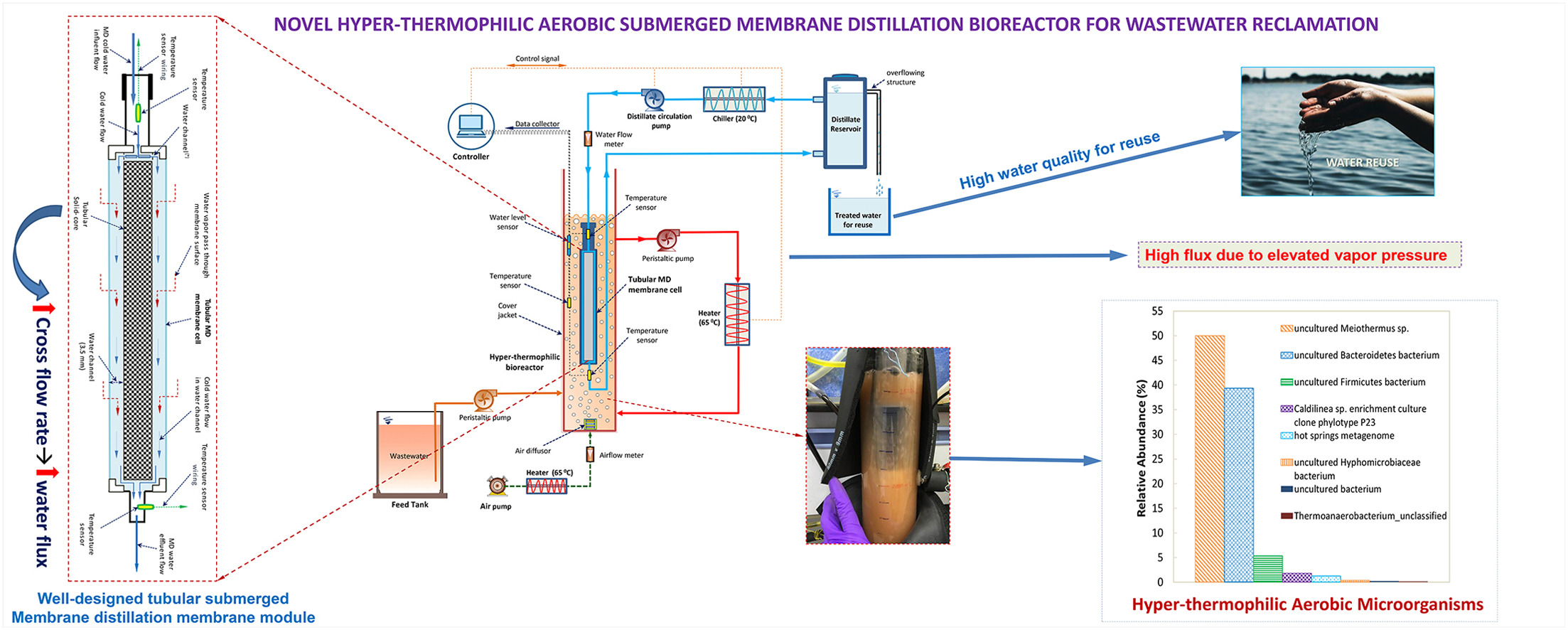
Graphical abstract.
Technology Overview
The HTAMR integrates a hyper-thermophilic aerobic bioreactor with a submerged membrane distillation module to simultaneously remove pollutants and reclaim clean water. The system operates at 65 °C, enhancing microbial degradation, maintaining stable treatment performance under high salinity, and producing high-quality permeate through efficient membrane distillation.
Applications & Benefits
The technology is suitable for industrial and municipal wastewater reclamation, especially high-strength wastewater. It provides excellent organic and nutrient removal, produces reusable water, reduces chemical consumption, supports thermophilic microbial activity, and offers an energy-efficient, sustainable approach for advanced wastewater treatment and water reuse.
Abstract:
For the first time, a hyper-thermophilic aerobic (>60 °C) bioreactor has been integrated with direct submerged membrane distillation (MD), highlighting its potential as an advanced wastewater treatment solution. The hyper-thermophilic aerobic bioreactor, operating up to 65 °C, is tailored for high organic removal, while MD efficiently produces clean water. Throughout the study, high removal rates of 99.5% for organic matter, 96.4% for ammonia, and 100% for phosphorus underscored the impressive adaptability of microorganisms to challenging hyper-thermophilic conditions and a successful combination with the MD process. Despite the extreme temperatures and substantial salinity accumulation reaching up to 12,532 μS/cm, the biomass of microorganisms increased by 1.6 times over a 92-day period, representing their remarkable resilience. The distillation flux ranged from 6.15 LMH to 8.25 LMH, benefiting from the temperature gradient in the hyper-thermophilic setting and the design of the tubular submerged MD membrane module. The system also excels in pH control, utilizing fewer alkali and nutritional resources than conventional systems. Meiothermus, Firmicutes, and Bacteroidetes, the three dominant species, played a crucial role, showcasing their significance in adapting to high salinity and decomposing organic matter.
Innovative hyper-thermophilic aerobic submerged membrane distillation bioreactor for wastewater reclamation
Author:Le Huy Quang, Duong Chinh Cong, Chang Hau-Ming, Nguyen Nguyen Cong, Chien I-Chieh, Ngo Huu Hao, Chen Shiao-Shing
Year:2024
Source publication: Chemosphere, Volume 362, August 2024, 142743
Subfield Highest percentage: 99% Public Health, Environmental and Occupational Health #7/687