

Assessing land resource planning for agrivoltaics development: Examining synergies approaches between government and farmers
This study addresses Taiwan's land resource conflict between expanding solar energy and maintaining agricultural food security. Centered on "Agrivoltaics"—the symbiotic co-existence of solar panels and crop cultivation—the research proposes a bi-level programming model to balance government policy costs with farmers' land revenues. Taking Taiwan's rice paddy fields as a case study, the paper models crop growth under different shading rates and regional constraints. The findings demonstrate that allocating 10% to 30% of farmland for solar installations achieves substantial green capacity while successfully safeguarding essential agricultural yields and boosting rural incomes.
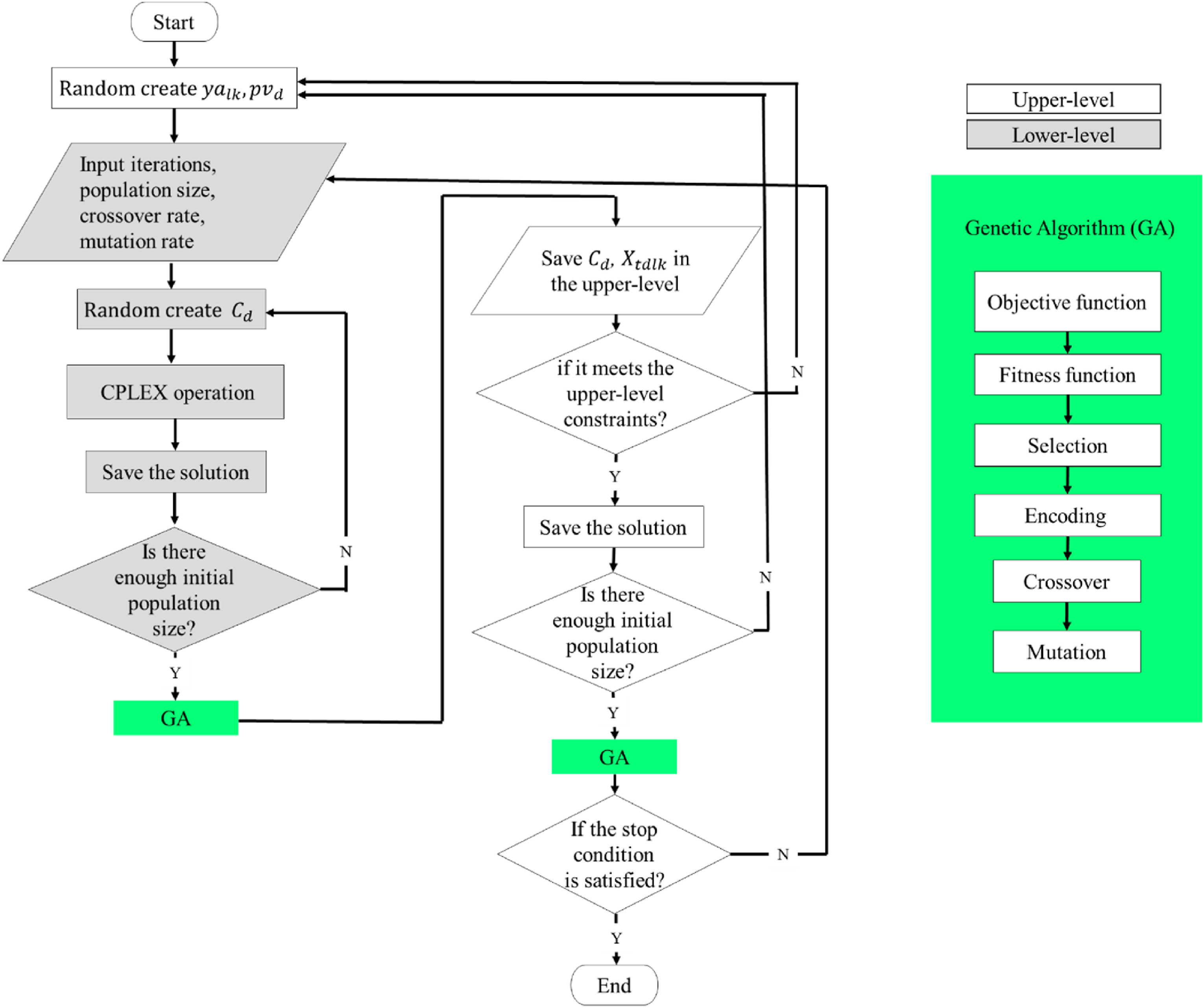
Fig. 4. Research process of hybrid bi-level programming model.
Technology Overview
The study implements a hybrid bi-level programming model optimized using Python and IBM ILOG CPLEX. To resolve the model's inherent non-linear complexities, a Genetic Algorithm (GA) is utilized to dynamically optimize crop shading ratios. The upper-level model minimizes government expenditures, while the lower-level model maximizes farmers' land revenues under localized agricultural restrictions.
Applications & Benefits
This model is applicable to regional land-use planning and renewable energy policy formulation. Beneficially, installing solar panels on 10%–30% of paddy fields can generate 12.87 to 39.27 GW of capacity. This maintains a 70% crop harvest yield, offsets carbon emissions, and supplements farmers' income through optimized, flexible government feed-in tariffs.
Abstract:
In alignment with the global push for net zero emissions, solar energy stands out as a crucial renewable source. The International Energy Agency forecasts that by 2030, solar and wind energy will supply nearly half of the world's electricity, with solar energy growing at triple its current rate. Taiwan has set ambitious targets, aiming to achieve a solar panel capacity of 20 GW by 2025 and reaching 40–80 GW capacity as part of its goal for net zero emissions by 2050. However, this pursuit impacts limited land resources, particularly agricultural land and food security. This study delves into “Agrivoltaics,” a symbiotic solar-crop relationship, as a solution to balance energy development and agricultural needs in Taiwan. Using Taiwan as a case study, a bi-level programming model was developed, considering government subsidies and farmers' income. Challenges faced by the government in regional land planning were revealed, and recommendations for specific crop areas were made based on shading rates and land constraints. The study proposes a win-win situation, fostering cooperation between the government and farmers. Implementing solar panels on 10 %–30 % of available land can yield installation capacities from 12.87 GW to 39.27 GW, maintaining a 70 % harvest yield for crops and meeting objectives. This approach showcases the significant contribution of integrated solar energy to Taiwan's paddy field development, reducing net carbon emissions effectively.
Assessing land resource planning for agrivoltaics development: Examining synergies approaches between government and farmers
Author:Hsu Hsin-Wei, Yang Chu-Chuan
Year:2024
Source publication: Energy, Volume 298, 1 July 2024, 131363
Subfield Highest percentage: 99% Modeling and Simulation #2/361