

Recycling light-emitting-diode waste quartz sand and stone sludge for the synthesis of amine grafted mesoporous humidity control material
This study proposes a cost-effective method to recycle light-emitting-diode (LED) waste quartz sand and stone sludge to synthesize mesoporous materials. These problematic industrial byproducts are transformed into useful humidity-conditioning materials, achieving 100% recycling. This approach reduces environmental issues, costs, and the high energy consumption typically associated with mechanical dehumidifiers, contributing significantly to sustainable development goals.
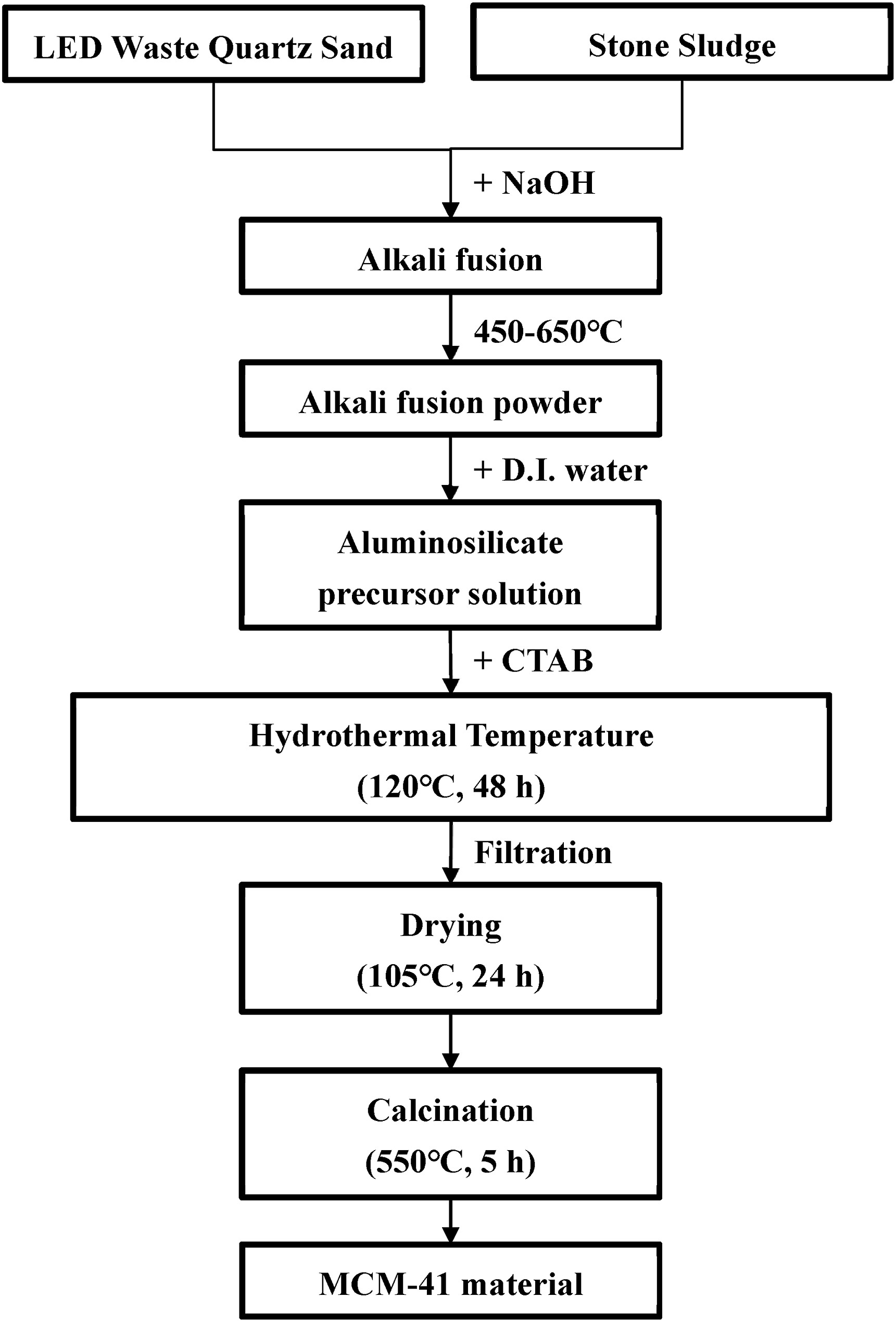
Fig. 1. Flow chart for the preparation of MCM-41.
Technology Overview
Silicon and aluminum precursors are extracted from LED waste quartz sand and stone sludge using the alkali fusion method. Mesoporous MCM-41 is then synthesized via a hydrothermal reaction and functionalized through amine group grafting (AGG-MCM-41) to enhance its structural stability and hydrophilicity.
Applications & Benefits
The synthesized AGG-MCM-41 is applied as an eco-friendly building material for smart indoor humidity control. It spontaneously narrows indoor humidity fluctuations via capillary action without consuming energy, outperforming metal-organic framework humidity pumps by over 44 times.
Abstract:
This article proposes a cost-effective development method to recycle two types of waste material (i.e., light-emitting-diode (LED) waste quartz and stone sludge) to produce mesoporous materials. The proposed method is simple yet effective. Extraction of the precursor liquid from the silicon and aluminum sources respectively contained in the waste quartz and stone sludge is based on the alkali fusion method, and the mesoporous material is synthesized after the hydrothermal reaction. The novelty of this work lies in our functionalization of Mobil Composition of Matter No. 41 (MCM-41) through amine group grafting (AGG-MCM-41). The results show that the structure of the mesoporous MCM-41 grafted by the amine functional groups remains orderly. The 29Si nuclear magnetic resonance spectrum confirmed that the supported surface of the MCM-41 features a large number of silanol groups, which verifies that modification of the amine functional group improved the effect. The results show that when the addition amount of amine functional group is 5 vol% (when relative humidity = 95%), the highest equilibrium moisture content of the material is 26.5 kg/kg. The wet performance of the material was studied, and it was proved that 5.0-AGG-MCM-41 complies with the standard of Japanese Industrial Standard (JIS A 1475) (equilibrium moisture content>5 m3/m3). The research results also show that the optimal equilibrium moisture content is more than 44 times that of metal-organic frameworks humidity pump. Therefore, the synthesized AGG-MCM-41 offers excellent humidity control performance in the practical application of building materials as it narrows the indoor humidity fluctuation spontaneously without any energy consumption. This creates new opportunities for smart indoor humidity control. The amine-group-grafted MCM-41 effectively reduces the shortcomings of high energy consumption, high costs, and insufficient space caused by mechanical dehumidifiers. In addition, the production of AGG-MCM-41 from LED waste and stone sludge achieves 100% recycling. Transformation of two problematic industrial byproducts into humidity-conditioning materials with beneficial technical and environmental properties represents a significant contribution towards the goals of sustainable development.
Recycling light-emitting-diode waste quartz sand and stone sludge for the synthesis of amine grafted mesoporous humidity control material
Author:Lin Ya-Wen, Lee Wei-Hao, Lin Kae-Long, Cheng Ta-Wui, Kuo Bo-Yi
Year:2022
Source publication: Journal of Cleaner Production, Volume 371, October 2022, 133425
Subfield Highest percentage: 99% Strategy and Management #4/473