

Crisp and fuzzy optimization models for sustainable municipal solid waste management
This paper presents crisp and fuzzy optimization models to design sustainable municipal solid waste (MSW) supply chain networks, balancing economic and environmental goals. Rapid urbanization has escalated MSW generation, causing severe greenhouse gas emissions. While landfilling remains prominent despite high carbon footprints, options like waste-to-energy and recycling offer viable conversions. The proposed mathematical framework effectively models mass balances, transport paths, and technology selection under conflicting objectives. Evaluated via a case study in Qingdao, China, the models address parameter uncertainties in cost coefficients and emission factors, providing robust solutions that successfully achieve significant cost and carbon emissions reductions.
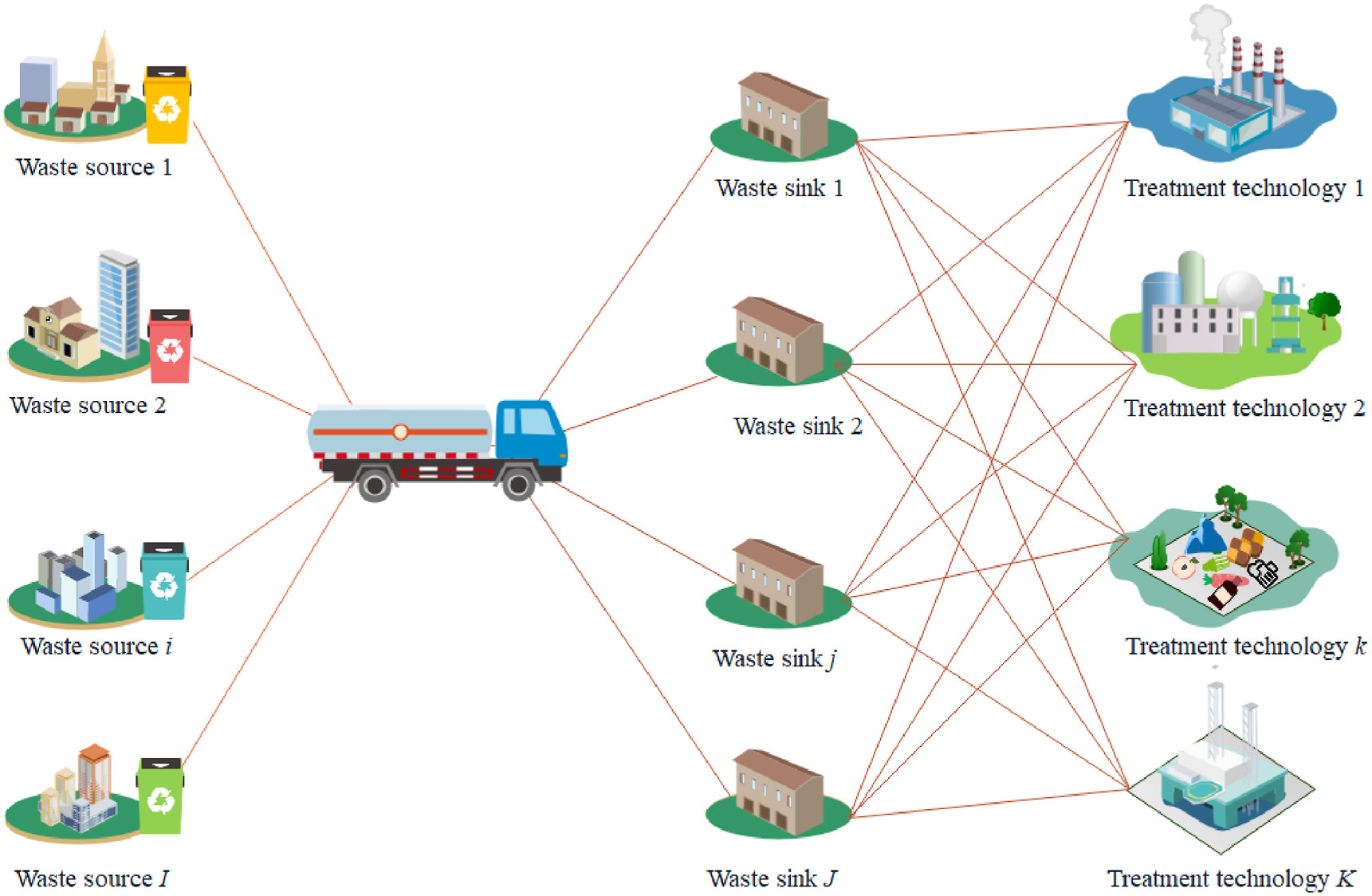
Fig. 1. Superstructure for MSW management.
Technology Overview
The framework utilizes mixed-integer linear programming (MILP) for the basic crisp model, established on a source-sink-treatment superstructure. It maps material balances, capacity limits, and planning constraints. To handle multi-objective conflicts and parametric uncertainties in treatment costs and emission factors, the crisp model is extended into a fuzzy optimization model (MINLP) using max-min aggregation and linear membership functions.
Applications & Benefits
The models apply directly to regional urban planning and sustainable MSW logistics network management. By optimizing waste allocation and integrating technologies like carbon capture and storage (CCS), decision-makers can systematically evaluate cost-emissions trade-offs via Pareto frontiers. The fuzzy compromise solution provides robust planning stability under uncertainty, delivering up to a 21.6% cost reduction and 28.4% emissions reduction.
Abstract:
Increasing municipal solid waste (MSW) generation in the city has caused a serious problem to the authority, especially for emerging countries. Improper management of MSW will increase greenhouse gas (GHG) emissions. Apart from landfill, there are other options to convert MSW into valuable products or energy, such as recycling and incineration. This paper presents crisp and fuzzy optimization models for designing optimal supply chain networks for sustainable MSW management, considering economic (cost minimization) and environmental objectives (emissions reduction). The crisp model is based on a superstructure and consists of material balances, capacity limits and planning constraints for MSW transfer stations, disposal sites and treatment technologies. Fuzzy optimization with max-min aggregation is then incorporated to handle conflicting economic and environmental objectives, as well as uncertainties in GHG emission factors and cost coefficients of MSW treatment. A case study for the design of an optimal MSW supply chain network in the city of Qingdao, China is presented to illustrate the proposed approach. The conflicting objectives of minimizing the total net cost and GHG emissions for MSW transport and treatment are analyzed using the crisp model, yielding a set of Pareto optimal solutions. A compromise solution achieving a 21.6% cost reduction and a 28.4% emissions reduction is identified using the fuzzy model. An inferior solution is also found with smaller cost (19.1%) and emissions reductions (25.1%) due to the use of conservative estimates of uncertain cost coefficients and emission factors. These results demonstrate the effectiveness of the proposed models in dealing with the MSW management problem.

Crisp and fuzzy optimization models for sustainable municipal solid waste management
Author:Li Zhiwei, Huang Tianyue, Lee Jui-Yuan, Wang Ting-Hao, Wang Siqi, Jia Xiaoping, Chen Cheng-Liang, Zhang Dawei
Year:2022
Source publication: Journal of Cleaner Production, Volume 370, 10 October 2022, 133536
Subfield Highest percentage: 99% Strategy and Management #4/473