

Strengthening SUPI Security in 5G Core Networks for Non-Public Applications
This study addresses critical security vulnerabilities in managing the Subscription Permanent Identifier (SUPI) within 5G Non-Public Networks (NPNs). While current 3GPP standards protect public networks, they leave private networks exposed to unauthorized SUPI access, null-scheme vulnerabilities, and systemic guessing attacks. The paper proposes an enhanced framework incorporating adaptive access controls and post-quantum cryptography (PQC) to secure sensitive subscriber data. Through simulation-based vulnerability assessments, the authors demonstrate a significant reduction in potential attack vectors, providing practical recommendations aligned with ongoing 3GPP standardization to fortify privacy and data security in industrial 5G ecosystems.
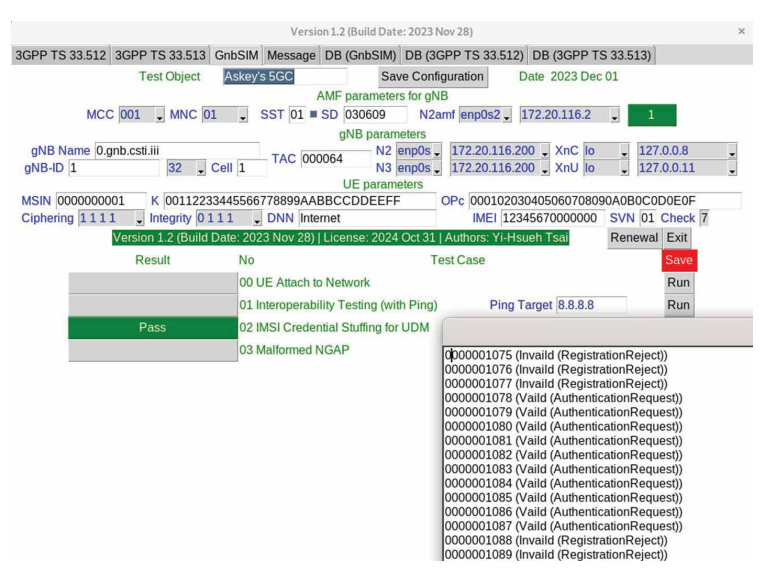
Fig. 2. Vulnerability Analysis of SUPI Data Behavior.
Technology Overview
The proposed technology enhances 5G core security for private networks through three key pillars: adaptive access controls that dynamically restrict profile querying, mechanisms that eliminate null-scheme identifier exposure, and the integration of post-quantum cryptography (PQC)—specifically lattice-based algorithms like ML-KEM—to protect SUPI data against quantum-computing threats during the subscription concealment process.
Applications & Benefits
This framework significantly reduces potential SUPI-related attack vectors in 5G private networks. Benefits include mitigated identity tracking, prevention of systematic brute-force guessing, and long-term data privacy against harvesting attacks. It bridges the security gap in industrial 5G setups, ensuring robust, forward-looking data protection for critical non-public network applications.
Abstract:
This study addresses key security challenges in managing the Subscription Permanent Identifier (SUPI) within 5G Non-Public Networks (NPNs). Existing 3GPP standards, optimized for public networks, leave private networks vulnerable to risks such as unauthorized SUPI access and systematic guessing attacks. To address these issues, we propose several enhancements, including adaptive access controls, measures to prevent the vulnerabilities associated with the null-scheme, and the adoption of post-quantum cryptography to safeguard sensitive subscriber data. Our methodology combines simulation-based vulnerability assessments with targeted countermeasures to reduce SUPI-related security risks. The results highlight a significant reduction in potential attack vectors, providing practical recommendations for improving privacy and data security within 5G NPNs. By aligning with ongoing 3GPP standardization efforts, our work offers a forward-looking framework to mitigate emerging threats, particularly as quantum computing becomes a critical concern.
Strengthening SUPI Security in 5G Core Networks for Non-Public Applications
Author:Tsai Yi-Hsueh, Chen Shiang-Jiun
Year:2025
Source publication: IEEE Communications Standards Magazine, Volume: 9, Issue: 3, September 2025
Subfield Highest percentage: 99% Law #8/1162