

Multimodal interaction in EMI classrooms: how does ESP-EMI teacher collaboration make a difference?
This study investigates how collaboration between English for Specific Purposes (ESP) and English-Medium Instruction (EMI) lecturers enhances multimodal classroom interaction in higher education. Using a collaborative inquiry model involving co-researching, co-planning, co-teaching, and co-reflecting, eight university lecturers participated in a semester-long program. Analysis of classroom recordings and interviews revealed significant improvements in student participation, turn-taking, eye contact, and classroom engagement. The findings demonstrate that ESP-EMI collaboration strengthens lecturers’ multimodal interactional competence and supports sustainable professional development in EMI contexts.
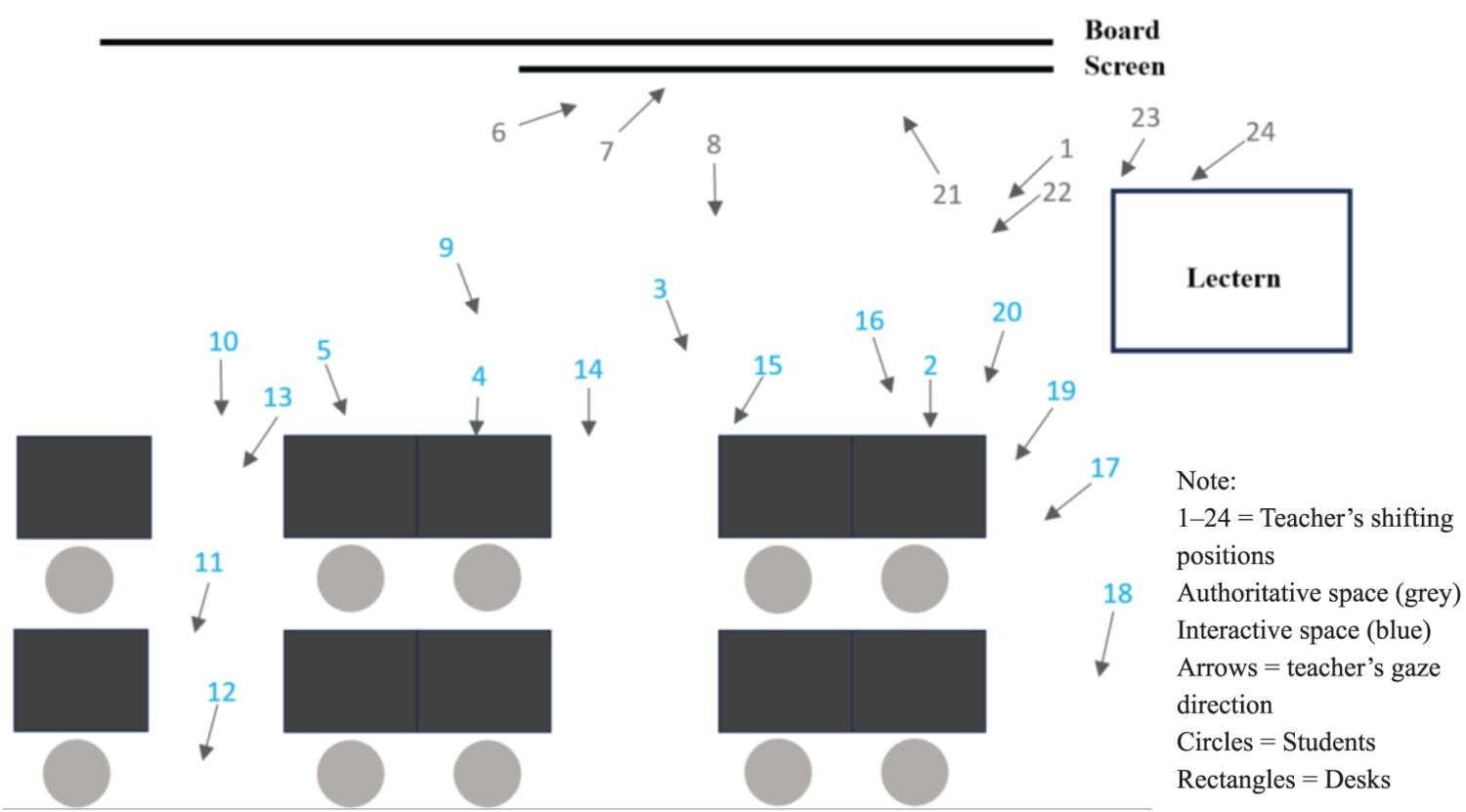
Figure 3. Examples of teacher’s dynamic spatial position (duration: 2 min 35 sec).
Technology Overview
The study introduces an ESP-EMI collaborative inquiry model integrating co-researching, co-planning, co-teaching, and co-reflecting. By combining verbal and non-verbal communication strategies, the model helps EMI lecturers improve classroom interaction, increase student engagement, and develop multimodal teaching competence.
Applications & Benefits
The model can be applied in EMI teacher training and higher education programs. It promotes student participation, improves communication effectiveness, enhances multimodal teaching practices, and provides sustainable professional development through interdisciplinary collaboration between language and content specialists.
Abstract:
This study investigates how collaboration between English for Specific Purposes (ESP) and English Medium Instruction (EMI) lecturers enhances classroom interaction in EMI settings. It provides empirical analysis of shifts in verbal and non-verbal interactional patterns before and after structured ESP-EMI collaborative inquiry activities, and explores how these experiences shaped EMI lecturers’ instructional practices and professional development. Design and methodology: The study involved eight university lecturers, paired into four teams, each consisting of one EMI and one ESP lecturer. Using a genre-based approach to co-researching, co-planning, co-teaching, and co-reflecting, these teams engaged in independent collaboration. Data were collected from video-recorded teaching sessions and semi-structured interviews, capturing both verbal (e.g. teacher-student discourse, turn-taking behavior) and non-verbal (e.g. eye contact, spatial positioning) interactional dynamics. Findings and Originality: Post-collaboration classroom sessions revealed notable increases in student verbal interaction, extended turns, improved turn-taking dynamics, and more active use of non-verbal cues. The findings highlight the multimodal dimensions of classroom interaction and demonstrate how structured collaborative engagement can transform teaching and learning practices. The study provides empirical evidence that ESP-EMI partnerships can enhance lecturers’ capacity to strategically integrate a range of linguistic and semiotic resources. Value: This study presents an innovative ESP-EMI collaborative inquiry model that enhances novice EMI lecturers’ multimodal interactional competence. It advances inclusive, sustainable professional development by providing insights to strengthen interdisciplinary collaboration in EMI contexts.
Multimodal interaction in EMI classrooms: how does ESP-EMI teacher collaboration make a difference?
Author:Lin Yen-Liang
Year:2025
Source publication: Innovation in Language Learning and Teaching, DOI: 10.1016/j.jobe.2025.113032
Subfield Highest percentage: 99% Language and Linguistics #8/1137