

Investigating the cognitive enhancement effects of multisensory VR reminiscence therapy on older adults: Analyzing the impact of sensory combinations
This study investigates the cognitive effects of multisensory virtual reality (VR) reminiscence therapy for older adults. A culturally relevant agricultural VR environment integrating visual, auditory, tactile, and olfactory stimuli was developed to stimulate autobiographical memories. Thirty older adults participated in either a multisensory VR group or a visual-only VR group. Results showed that multisensory VR significantly improved spatial positioning, detailed memory, and time sequencing abilities. The findings demonstrate that combining multiple sensory cues with reminiscence therapy can effectively enhance cognitive function and provide a promising non-pharmacological intervention for healthy aging and dementia prevention.
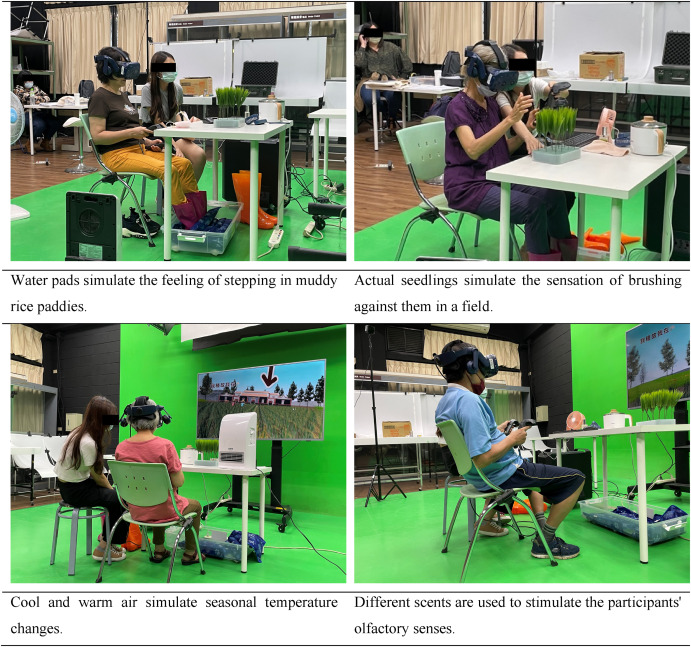
Fig. 2. During the VR interaction, researchers provided real-time visual, auditory, tactile, and olfactory stimulation to evoke participants' deep memories and emotions.
Technology Overview
The study developed a multisensory VR reminiscence system using visual, auditory, tactile, and olfactory stimulation. A Taiwan agricultural-life scenario was created in Unity and delivered through HTC VIVE Pro 2 to provide immersive cognitive training for older adults.
Applications & Benefits
The system can support cognitive rehabilitation, dementia prevention, and elderly care. Multisensory VR improves memory recall, spatial awareness, and temporal cognition while increasing emotional engagement and immersion, offering an effective non-pharmacological intervention for aging populations.
Abstract:
As individuals age, sensory functions and cognitive abilities decline, particularly in spatial positioning, detailed memory, and time sequencing, which significantly affect daily life. While VR has been used for cognitive training, most systems rely primarily on visual stimuli, with limited integration of multiple sensory modalities. Consequently, the specific benefits and interactions of multisensory stimulation with cognitive functions in older adults remain unclear. This study examines the effects of multisensory VR stimulation compared to visual-only VR on older adults' spatial positioning, detailed memory, and time sequencing. We developed a culturally relevant VR experience based on traditional Taiwanese agricultural life, integrating visual, auditory, tactile, and olfactory stimuli to evoke emotional memories and stimulate cognitive function. Thirty older adults (65–75 years) were recruited and divided into two groups through a structured allocation process. The experimental group (n = 15) used the multisensory VR system, while the control group (n = 15) used the visual-only VR system. Allocation was balanced based on age, cognitive ability (HDS-R scores), and other relevant factors to maintain internal validity. After four stages of reminiscence-based cognitive training, participant performance was assessed using the Comprehensive Cognitive Ability Test Questionnaire, the Cognitive Function Recall Effectiveness Scale, and the Multisensory Stimulation and Cognitive Rule Correspondence Assessment Scale. The results showed that the experimental group outperformed the control group in spatial positioning, detailed memory, and time sequencing. These findings highlight the impact of different sensory combinations on cognitive functions, emphasizing the role of multisensory integration in cognitive enhancement among older adults.
Investigating the cognitive enhancement effects of multisensory VR reminiscence therapy on older adults: Analyzing the impact of sensory combinations
Author:Lee I-Jui, Pan Xin-Ting
Year:2025
Source publication: Computers in Human Behavior, Volume 168, July 2025, 108668
Subfield Highest percentage: 99% Arts and Humanities #1/692