

What promotes the mobile payment behavior of the elderly?
This study models elderly users’ intention to adopt mobile payment by integrating TAM and ISSM. It shows key roles for ease of use, trust, and information quality. Reducing perceived risks improves adoption among older adults. Results guide developers and policymakers toward age-friendly digital finance. The research expands behavioral theory for technology use in aging societies.
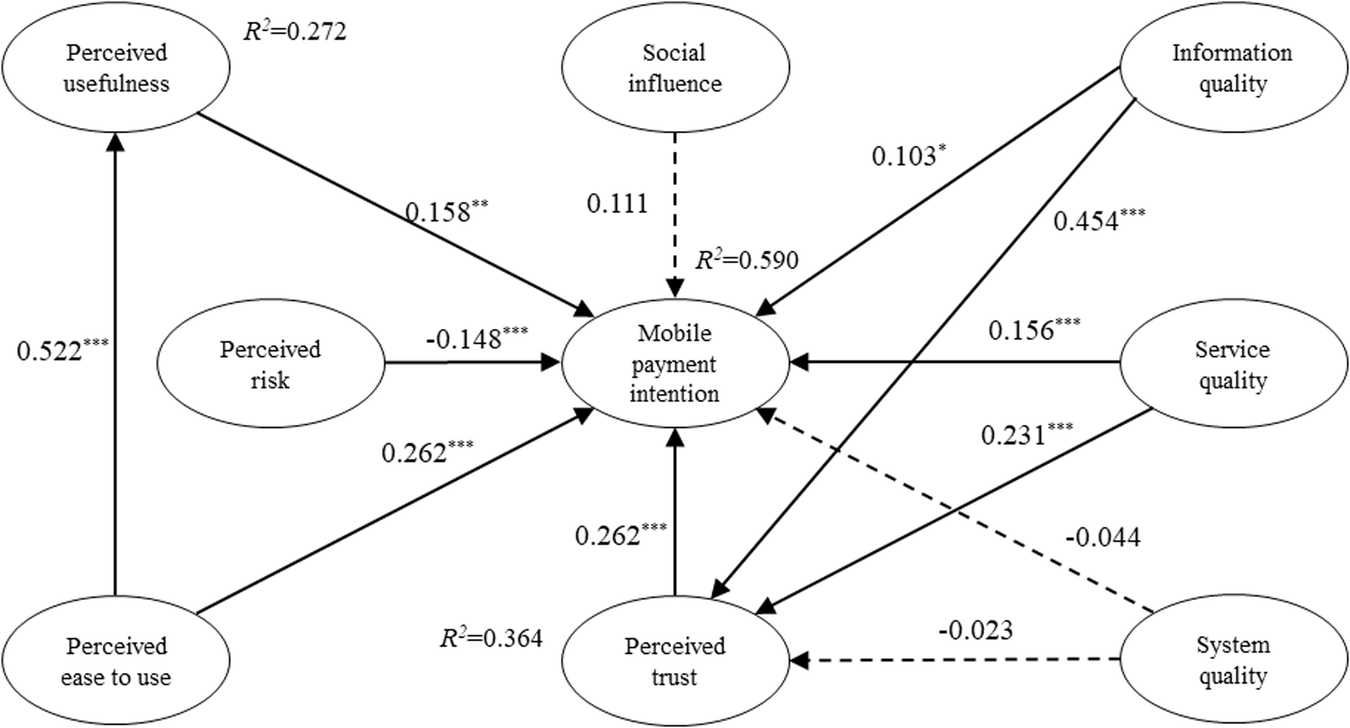
Fig. 2: Assessment result. This study revealed the influencing factors of the elderly’s mobile payment intention.
Technology Overview
This study integrates the Technology Acceptance Model (TAM) and the Information Systems Success Model (ISSM) to develop and validate a theoretical model explaining elderly individuals’ intention to adopt mobile payments. Using partial least squares structural equation modeling, the model demonstrates a 59% explanatory power, showing strong fit and validity. Key influencing factors include Perceived Usefulness (PU), Perceived Ease of Use (PEOU), Information Quality (IQ), System Execution Quality (SEQ), Perceived Trust (PT), and Perceived Risk (PR). The model confirms that PU, PEOU, IQ, and SEQ positively influence adoption, while PR negatively affects intention. Social influence and system quality showed no significant effect on elderly users' intention to use mobile payment.
Applications & Benefits
This research offers valuable practical guidance for designing elderly-friendly mobile payment platforms. It emphasizes the importance of providing high-quality, clear, and responsive systems to enhance user trust and usability. Developers are encouraged to reduce perceived risk by avoiding intrusive advertising and minimizing data privacy concerns. The findings can inform regulators and policymakers in crafting inclusive digital policies and age-appropriate network supervision. The study provides a foundation for inclusive financial technology development that meets the specific needs of aging populations.
Abstract:
Mobile payment, as a new form of transactional payment method, has garnered attention from users. However, few studies have discussed the mobile payment behavior of the elderly. Our research aims to explore the influencing factors on elderly’s intention to use mobile payments. This research established and empirically validated a mobile payment acceptance model for the elderly. Structural equation modeling was employed to analyze data from 316 elderly participants. The results indicate that perceived ease of use directly affects perceived usefulness. The Mobile payment intention of the elderly is positive influenced by perceived usefulness and perceived ease to use. Furthermore, information quality and service quality directly influence perceived trust. Perceived trust, information quality, and service quality all have directly affects on the intention to use mobile payments. Mobile payment intention is negatively affected by perceived risk. The findings of this study can serve as references for mobile payment developers, as well as relevant policy-making and regulatory authorities, facilitating the design of mobile payment technology systems that are more suitable for the elderly and promoting the sustainable development of mobile payments.

What promotes the mobile payment behavior of the elderly?
Author:Tianyang Huang, Gang Wang, Chiwu Huang
Year:2024
Source publication:Humanities and Social Sciences Communications, volume 11, 08 November 2024
Subfield Highest percentage:99% General Arts and Humanities #2 / 176