

Impact of photoaging on the chemical and cytotoxic properties of nanoscale zeolitic imidazolate framework-8
This study shows that photoaging makes nZIF-8 nanoparticles less toxic and inflammatory. Aging leads to smaller particles with altered surfaces, reducing their biological reactivity. This transformation lowers potential health risks like COPD. Aged nZIF-8 may thus be safer for biomedical and environmental use. These findings support long-term safety evaluation for nanomaterials.
Technology Overview
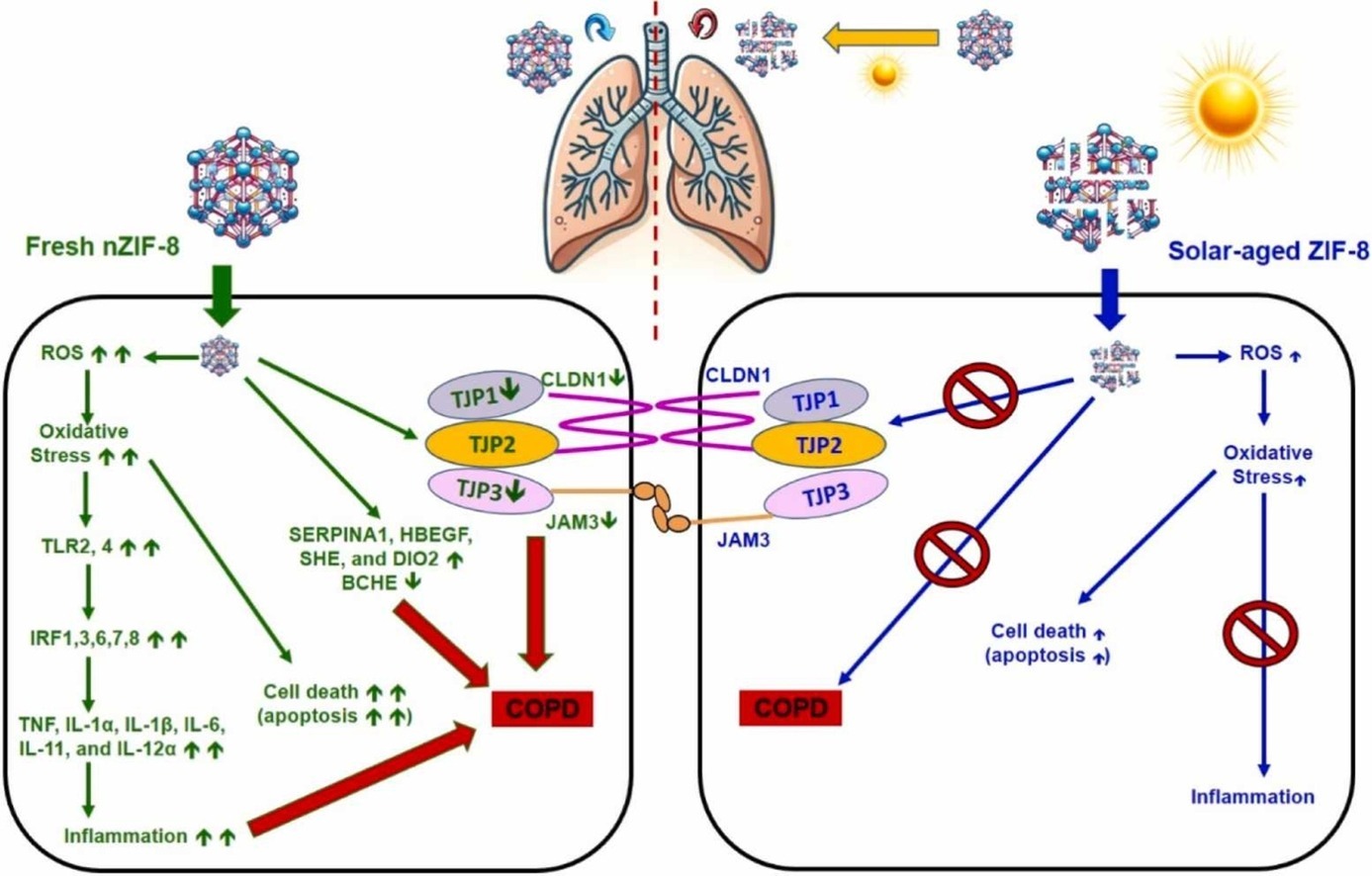
nZIF-8 induces oxidative stress, potentially initiating lung diseases. nZIF-8, vulnerable to light, changes in size and structure when exposed. Aging diminishes nZIF-8′s cytotoxic effects due to altered surface properties and reduced ROS. Aged nZIF-8 less effectively impacts genes associated with inflammation and COPD. Widespread use of nZIF-8 likely carries minimal risk for human lung health.
Applications & Benefits
This study reveals that photoaging significantly reduces the cytotoxicity and pro-inflammatory effects of nZIF-8 nanoparticles, suggesting improved biocompatibility over time. These changes may reduce health risks such as chronic obstructive pulmonary disease (COPD) when the material is used in biomedical or environmental settings. The findings emphasize that aged nZIF-8 may be safer for long-term applications, making it more suitable for sustainable use in human-exposed environments. Additionally, understanding the environmental transformation of nanomaterials supports more informed decisions regarding their regulatory and safety assessments. This work highlights the potential for safer nanotechnology through environmental aging.
Abstract:
This study investigated the influence of photoaging on a nanoscale metal-organic framework (MOF), truncated rhombic dodecahedron nano-zeolitic imidazolate framework-8 (nZIF-8), focusing on its oxidative stress, inflammation, and implications for pulmonary diseases. We observed significant photodegradation-induced transformations in nZIF-8, characterized by a reduction in particle size from 200.5 to 101.4 nm and notable structural disintegration after prolonged exposure to simulated solar radiation. This alteration resulted in a marked decrease in oxidative cytotoxicity in BEAS-2B cells, which was attributed to changes in surface properties and reduced reactive oxygen species (ROS) production. Gene expression analysis further revealed a decrease in cytotoxic and inflammatory responses, which potentially lowers the risk of chronic obstructive pulmonary disease (COPD). Aged nZIF-8 also showed diminished capacity to induce pro-inflammatory cytokines and influence COPD-related gene expression, reducing its potential to exacerbate COPD pathogenesis. Our findings highlight the critical need for comprehensive safety evaluations of these materials, while considering their long-term environmental and biological impacts. The diminished cytotoxicity and inflammatory potential of aged nZIF-8 highlighted its enhanced suitability for broader applications, indicating that photoaging may lead to safer and more sustainable material utilization.
Impact of photoaging on the chemical and cytotoxic properties of nanoscale zeolitic imidazolate framework-8
Author:Yi-Chun Chen, Kun-Yi Andrew Lin, Ying-Chu Chen, Yan-Yu Hong, Yu-Fang Hsu, Chia-Hua Lin
Year:2024
Source publication:Journal of Hazardous Materials, Volume 479, 5 November 2024
Subfield Highest percentage:99% Environmental Engineering #2 / 219
https://www.sciencedirect.com/science/article/pii/S0304389424021150