Design of multi-cycle organic Rankine cycle systems for low-grade heat utilisation
This paper presents an advanced mathematical optimization model (MINLP) for designing multi-cycle organic Rankine cycle (ORC) systems integrated with heat exchanger networks (HEN). Unlike conventional single-cycle methods, this research enables simultaneous determination of variable ORC configurations, operating conditions, and optimal working fluids across multiple cycles to maximize net power generation. The model is successfully validated through two practical case studies involving geothermal energy and industrial waste heat, proving its superior performance in energy recovery.
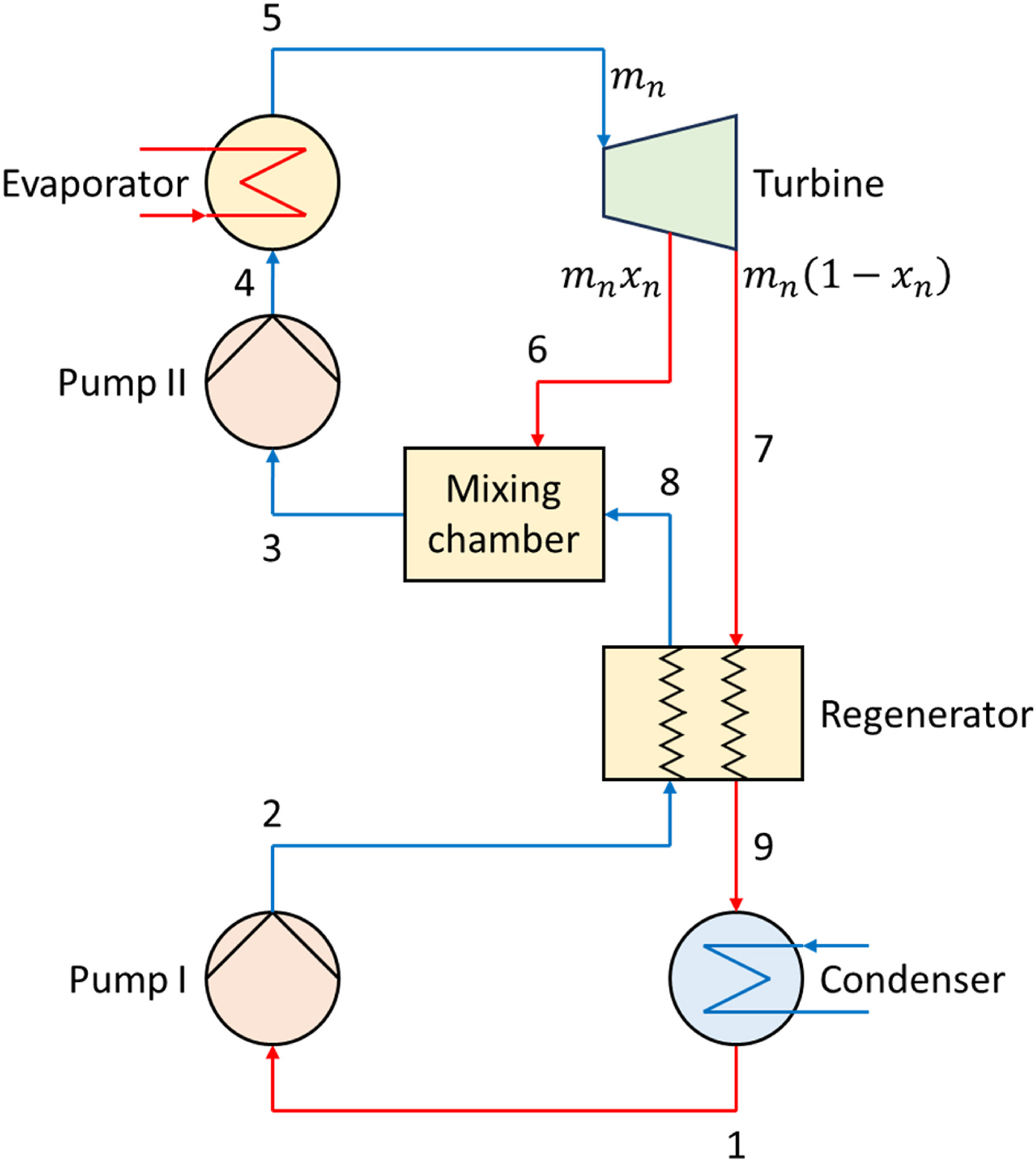
Fig. 1. Schematic diagram of the nth ORC.
Technology Overview
The technology utilizes a multi-cycle ORC-HEN model formulated as a mixed-integer nonlinear programme (MINLP). It simultaneously optimizes cycle operating parameters—such as evaporation temperatures, mass flow rates, and turbine bleeding/regeneration configurations—while synthesizing the heat recovery network without dividing stream phases, thereby minimizing heat exchanger units and total area.
Applications & Benefits
This system is applied to geothermal power generation and industrial waste heat recovery (e.g., refineries). It increases maximum net power output by up to 14.3%, requires fewer heat exchange units, and reduces capital costs. Long-term benefits include higher annual net profits (up to 24% increase) and significant carbon emissions reduction.
Abstract:
Organic Rankine cycles (ORCs) facilitate the utilisation of low-grade heat sources (e.g., geothermal and industrial waste heat) for power generation, thereby improving energy efficiency in industrial processes and expanding the application of renewable energy. Using multiple ORCs instead of a single cycle provides more flexibility in heat integration and can increase the power output. This paper presents a mathematical model for designing multi-ORC systems; the design task involves the determination of ORC configurations and operating conditions whilst synthesising the associated heat exchanger network. Two case studies on geothermal and industrial waste heat ORC applications illustrate the developed optimisation formulation. In the geothermal case study, the maximum net power output for a single regenerative n-butane cycle can increase by 11.2 % as a result of optimising the ORC operating conditions. With two independent n-pentane cycles, a 7.6 % increase in the maximum net power output can be reached by optimising the ORC configurations. In the industrial waste heat case study, a 14.3 % increase in the maximum net power generation is found with a second n-butane cycle, and a further 5.7 % increase with a third. For comparison, the total annual cost and the payback period are also calculated in both case studies.
Design of multi-cycle organic Rankine cycle systems for low-grade heat utilisation
Author:Lee Jui-Yuan, Chen Po-Ling, Xie Pei-Shan, Bandyopadhyay Santanu
Year:2024
Source publication: Energy, Volume 310, 30 November 2024, 133252
Subfield Highest percentage: 99% Modeling and Simulation #2/361