Optimized scheduling of resource-constraints in projects for smart construction
This paper addresses the critical issue of resource allocation and duration optimization in smart construction projects. Since traditional evolutionary computation models like Genetic Algorithms (GA) and standard Particle Swarm Optimization (PSO) easily fall into local optima when handling large-scale network planning, the authors propose two novel PSO-based models. Specifically, they introduce Resource-Constrained Adaptive Particle Swarm Optimization (RC-APSO) for static scheduling scenarios and Input-Adaptive Particle Swarm Optimization (iRC-APSO) for dynamic scheduling challenges. Experimental results validate that these models significantly improve algorithm accuracy, stability, and the probability of achieving the shortest project duration.
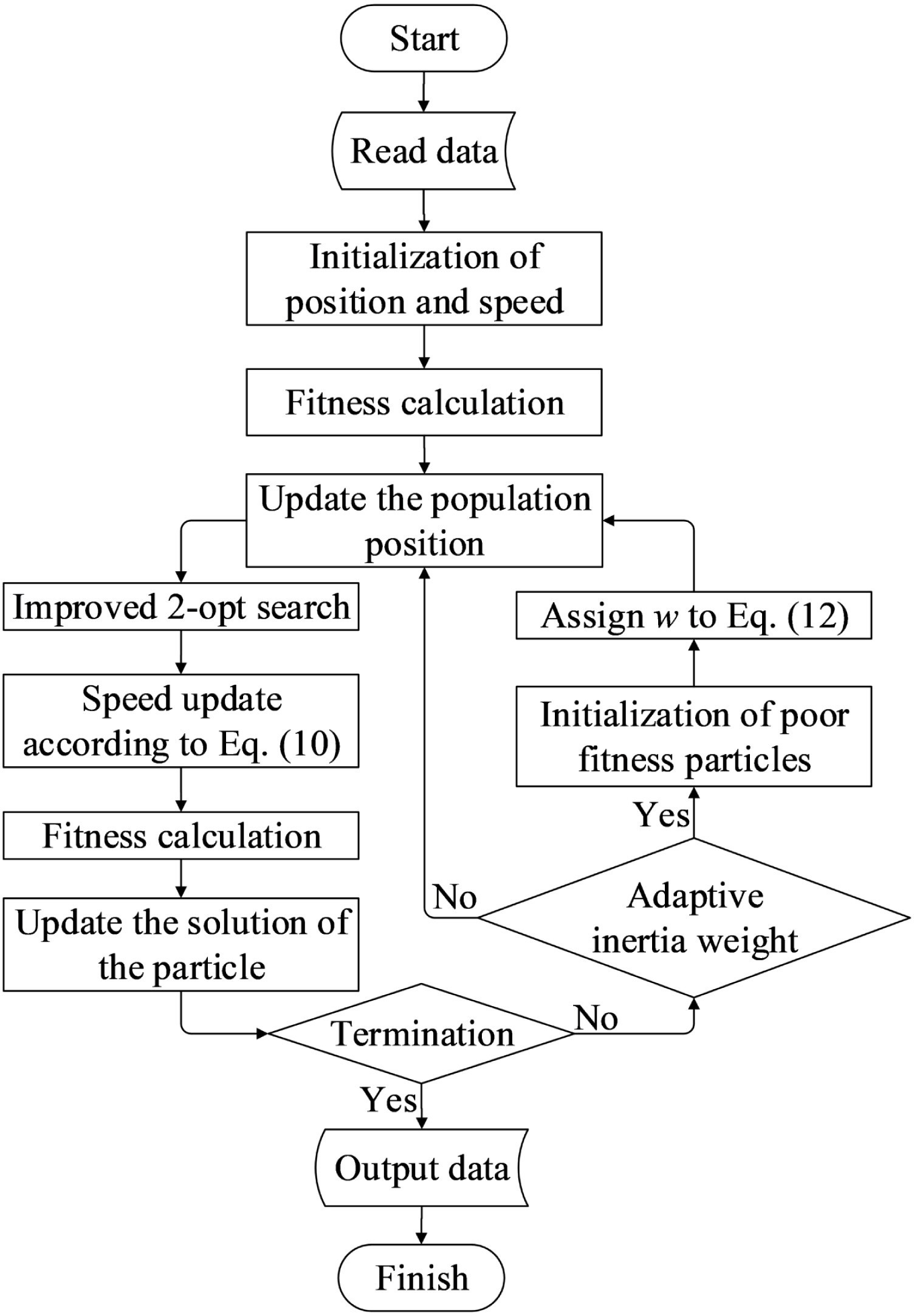
Fig. 2. The flowchart of the developed algorithm for resources-constraints project scheduling.
Technology Overview
The proposed framework enhances the standard PSO algorithm by integrating an improved 2-opt heuristic local search to boost local exploitation and employing dynamic adaptive inertia weights alongside a mutation mechanism to maintain population diversity and bypass premature convergence. While RC-APSO evaluates constraints like process logic and resource limits for static planning, iRC-APSO combines the Adaptive Heuristic PSO (AHPSO) with technical network scheduling parameter calculations to dynamically compute updated earliest start and finish times following unpredictable project delays.
Applications & Benefits
The primary application domain is smart construction project management and large-scale engineering project scheduling. By providing a universal Python-based implementation, the system allows project managers to effectively minimize project duration, accurately control construction schedules, and properly distribute limited resources. The core benefit lies in its dynamic adaptability, enabling realistic adjustments and optimized design schemes after unexpected workflow disruptions, thereby reducing additional engineering costs.
Abstract:
In real-life applications, resources in construction projects are always limited. It is of great practical importance to shorten the project duration by using intelligent models (i.e., evolutionary computations such as genetic algorithm (GA) and particle swarm optimization (PSO) to make the construction process reasonable considering the limited resources. However, in the general EC-based model, for example, PSO easily falls into a local optimum when solving the problem of limited resources and the shortest period in scheduling a large network. This paper proposes two PSO-based models, which are resource-constrained adaptive particle swarm optimization (RC-APSO) and an input-adaptive particle swarm optimization (iRC-APSO) to respectively solve the static and dynamic situations of resource-constraint problems. The RC-APSO uses adaptive heuristic particle swarm optimization (AHPSO) to solve the limited resource and shortest duration problem based on the analysis of the constraints of process resources, time limits, and logic. The iRC-APSO method is a combination of AHPSO and network scheduling and is used to solve the proposed dynamic resource minimum duration problem model. From the experimental results, the probability of obtaining the shortest duration of the RC-APSO is higher than that of the genetic PSO and GA models, and the accuracy and stability of the algorithm are significantly improved compared with the other two algorithms, providing a new method for solving the resource-constrained shortest duration problem. In addition, the computational results show that iRC-APSO can obtain the shortest time constraint and the design scheme after each delay, which is more valuable than the static problem for practical project planning.

Optimized scheduling of resource-constraints in projects for smart construction
Author:Lin Jerry Chun-Wei, Lv Qing, Yu Dehu, Srivastava Gautam, Chen Chun-Hao
Year:2022
Source publication: Information Processing and Management, Volume 59, Issue 5, September 2022, 103005
Subfield Highest percentage: 99% Media Technology #1/62