A feasibility study of using virtual reality as a pre-occupancy evaluation tool for the elderly
This study investigates the feasibility and potential adoption of virtual reality (VR) as a pre-occupancy evaluation (PreOE) tool tailored for older adults, focusing on technology adoption and spatial cognition. As global aging increases demand for high-quality housing, traditional design evaluation methods often fall short of addressing seniors' distinct needs. By conducting an experimental study with 32 healthy participants aged 60 and over, the research compares immersive and non-immersive VR conditions. The findings demonstrate that immersive VR is highly promising, providing an improved user experience alongside conventional assessment methods during early architectural stages
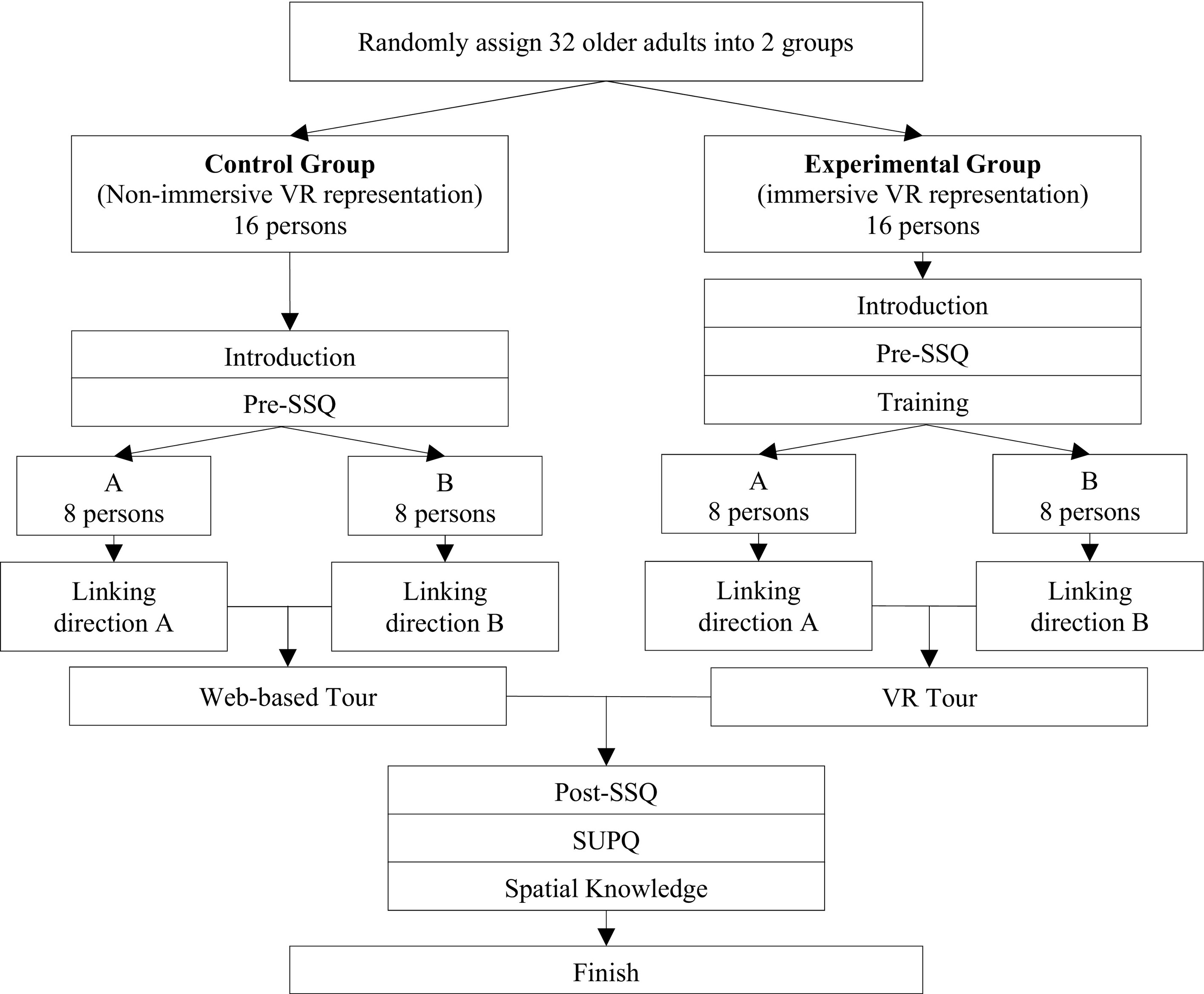
Fig. 1. Research Procedure.
Technology Overview
The research methodology utilizes an experimental setup dividing participants into an immersive VR group (using a Samsung Gear VR headset with a Galaxy S7 smartphone) and a non-immersive control group (using a standard laptop interface). The technical assessment quantitatively measures simulator sickness through the Simulator Sickness Questionnaire (SSQ), physical presence via the Slate-Usoh-Steed Presence Questionnaire (SUPQ), and spatial cognition through modified 3D model accuracy testing.
Applications & Benefits
This approach serves as a predictive assessment tool in interior design and housing evaluation specifically for the elderly and vulnerable populations. The primary benefits include enabling older adults to actively communicate real design feedback early on, achieving accurate spatial cognition and an enhanced sense of presence, all while ensuring absolute technological safety with negligible symptoms of simulator sickness.
Abstract:
This research aims to investigate the potential adoption of virtual reality (VR) as a pre-occupancy evaluation (PreOE) tool applied for older people, focusing on technology adoption and spatial cognition. An experimental study was conducted to explore simulator sickness, presence, and spatial cognition in immersive VR and non-immersive VR conditions. Thirty-two healthy older participants aged 60 and over were randomly divided equally into two groups, immersive VR and Non-immersive VR. The results indicated that immersive VR is promising to be applied safely for older people with no considerable recorded symptom of simulation sickness (SS). The presentation using immersive VR also provided a higher sense of presence and more accurate spatial cognition. Interestingly, the qualitative data shows positive aspects from the subjects' viewpoint. To conclude, immersive VR is feasible and effective to be used in coupling with conventional methods for the PreOE purpose among older people.

A feasibility study of using virtual reality as a pre-occupancy evaluation tool for the elderly
Author:Tseng, Kevin C., Giau Do Thi Ngoc
Year:2022
Source publication: Automation in Construction, Volume 134, February 2022, 104037
Subfield Highest percentage: 99% Civil and Structural Engineering #4/350