Enhancing 3D-printed cement mortar with recycled PCB glass fibers: Printability, mechanical strength, and FEM-based structural assessment
This study evaluates the feasibility of incorporating waste printed circuit board glass fiber powder (WPCBP) into 3D-printed cement mortar. It systematically investigates how varying WPCBP replacements affect material printability, initial setting time, extrudability, flowability, and mechanical properties. Additionally, finite element method (FEM) simulations are conducted to analyze the structural performance of large-scale 3D-printed components. The results show that a 5% WPCBP replacement delivers optimal mechanical strength and structural stability, proving that recycling electronic waste into 3D concrete printing offers a highly sustainable and effective solution for the modern construction industry.
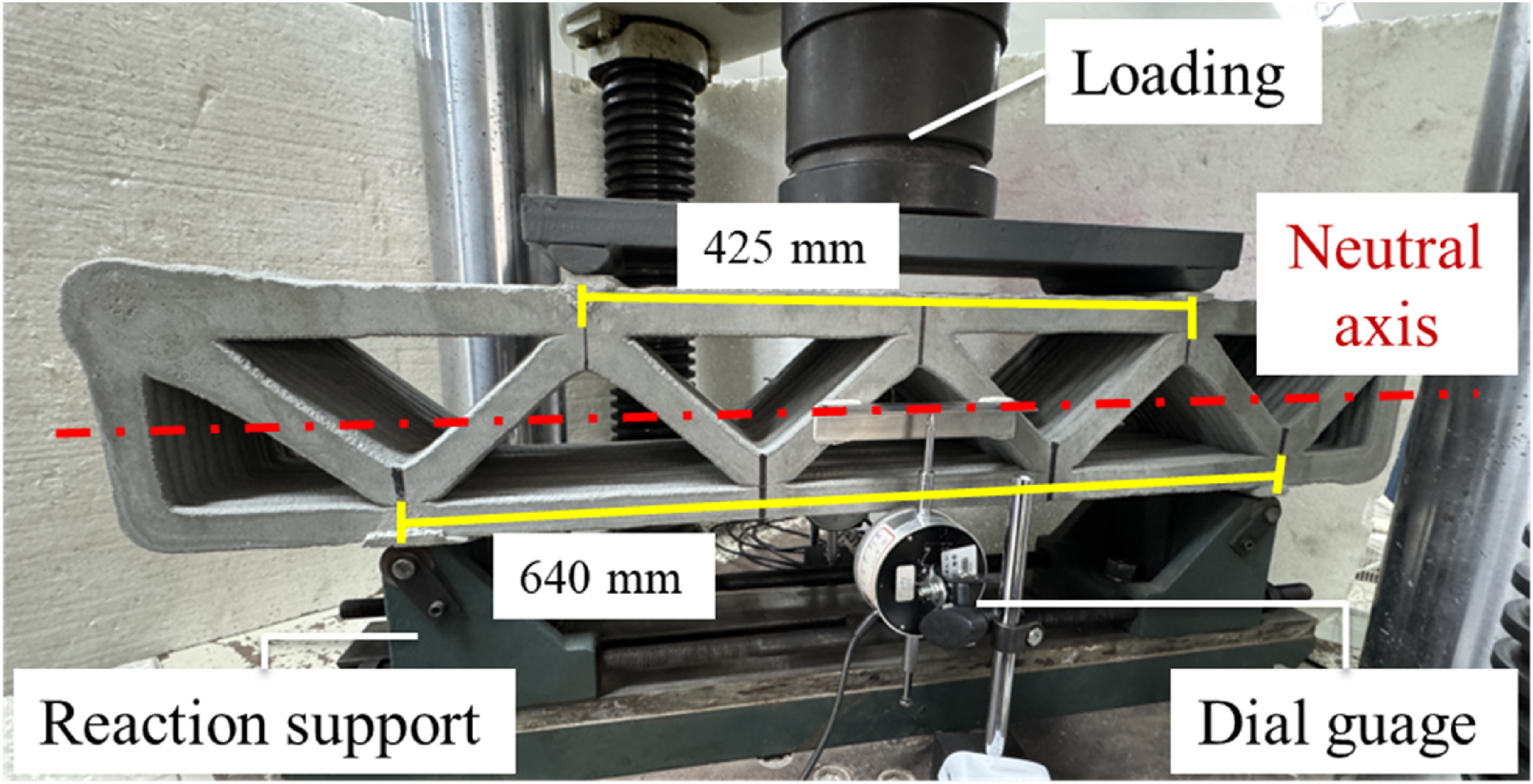
Fig. 6. The illustration of the experimental setup of the four-point bending test of 3D printing truss member.
Technology Overview
This technology enhances 3D-printed cement mortar by incorporating recycled glass fibers derived from waste printed circuit boards (WPCBP). The optimal mix design features a 5% WPCBP replacement, balanced with a superplasticizer to maintain crucial printability traits such as extrudability and flowability, and validated through numerical Finite Element Method (FEM) modeling for large-scale applications.
Applications & Benefits
Applied to automated construction, this technology upcycles electronic waste into sustainable building materials. A 5% WPCBP addition improves compressive, flexural, and splitting tensile strengths of printed mortar. It reduces environmental pollution from discarded PCBs, lowers building carbon footprints, and provides reliable, eco-friendly structural components validated for industrial-scale 3D concrete printing.
Abstract:
This study evaluates the feasibility of incorporating waste printed circuit board glass fiber powder (WPCBP) into 3D-printed cement mortar for structural applications. Printability was assessed by measuring initial setting time, extrudability, flowability, and buildability. Mechanical properties were evaluated through compressive, flexural, and splitting tensile tests. Among all specimens, the mortar with a WPCBP-to-cement ratio of 0.2 exhibited the best mechanical performance across all tests. Four-point bending tests on 3D-printed truss elements, validated by finite element simulations, confirmed that WPCBP enhances the mechanical and structural behavior of the components. In addition, the results highlighted pronounced anisotropic behavior in the 3D-printed specimens, with strength dependent on the printing and loading directions. Overall, integrating WPCBP with 3D printing improves material performance and facilitates effective recycling of non-metallic electronic waste.

Enhancing 3D-printed cement mortar with recycled PCB glass fibers: Printability, mechanical strength, and FEM-based structural assessment
Author:Li Yeou-Fong, Lin Chih-Chieh, Syu Jin-Yuan, Huang Chih-Hong, Chiu Yu-Tsung, Lok Man-Hoi, Kuo, Wen-Shyong
Year:2025
Source publication: Journal of Building Engineering, Volume 115, December 2025, 114485
Subfield Highest percentage: 99% Architecture #2/210