Using asymmetric AR and VR technologies combined with peer collaboration and symbolic play to enhance intent understanding and empathy in children with autism
This study developed an Asymmetric Symbolic Play (ASP) system that combines augmented reality (AR), virtual reality (VR), peer collaboration, and symbolic play to improve empathy and intent understanding in children with autism spectrum disorder (ASD). Through asymmetric roles and information sharing, children cooperate to interpret social cues and symbolic meanings. A multiple-baseline experiment involving four children with ASD demonstrated that the system effectively enhanced empathy, perspective-taking, and social interaction skills.
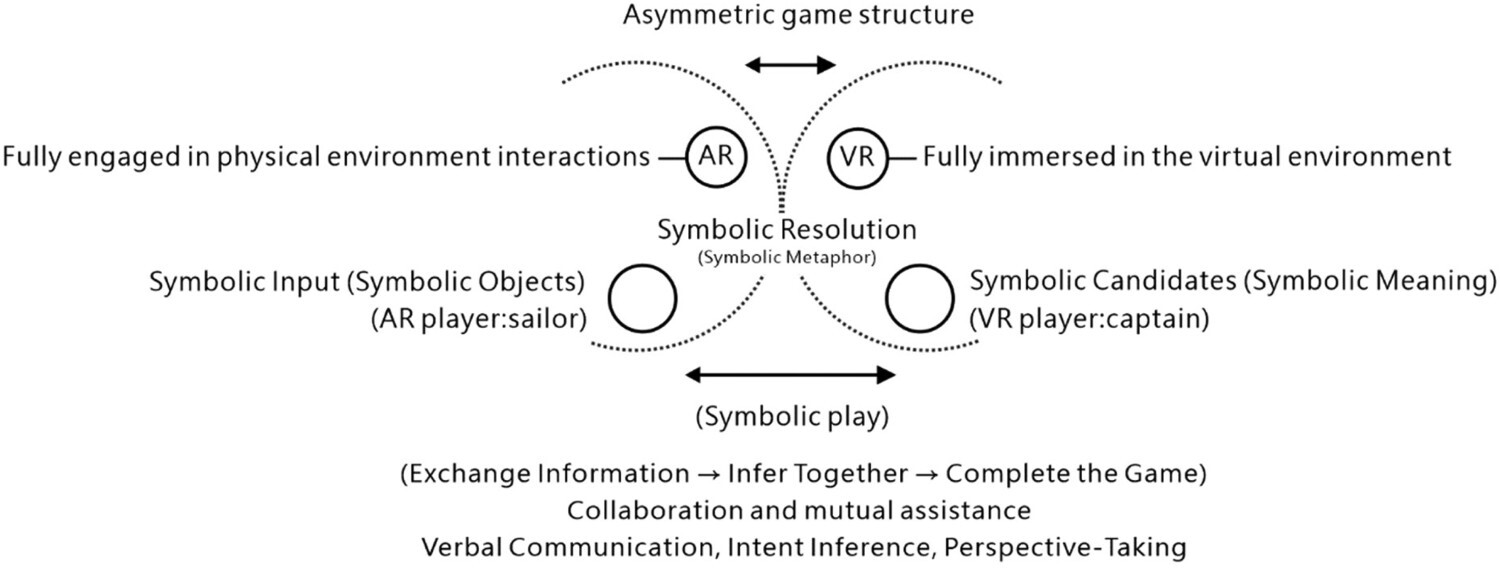
Fig. 1. Diagram of the asymmetric game structure.
Technology Overview
The study proposes an ASP system integrating AR, VR, concept mapping, symbolic play, and asymmetric game design. AR players collect symbolic clues, while VR players interpret meanings through communication and collaboration, encouraging perspective-taking and social reasoning.
Applications & Benefits
The system can support autism intervention, social skills training, and special education. It improves empathy, communication, symbolic reasoning, and perspective-taking abilities while promoting collaboration and meaningful social interaction among children with ASD.
Abstract:
Children with autism spectrum disorder (ASD) face social challenges, particularly in developing empathy and perspective-taking, which involve complex social cognition and intent recognition. These abilities are difficult to acquire through repetitive imitation or role-playing alone; they require active interaction and game-based tasks that foster purposeful verbal communication, mental projection, and intent judgment. This study therefore developed an Asymmetric Symbolic Play (ASP) system that integrates augmented reality (AR) and virtual reality (VR) visual strategies. The system increases visual separation and information disparity between players, requiring collaboration through verbal communication, mental projection, and intent judgment. Each player is placed in a distinct AR or VR environment with symbolic play mechanisms, and they work together to interpret the symbolic meanings embedded in their partner's clues. The ASP system encourages children with ASD to collaboratively interpret social cues—symbolic vocabulary, actions, and cues—symbolic infer social meanings, activities, and emotions. This process stimulates empathy and perspective-taking, thereby promoting social interaction skills. To assess the system's effectiveness, four high-functioning children with ASD participated in a multiple-baseline experiment. Results showed that the ASP system, through AR and VR strategies, can effectively support the gradual development of empathy in children with ASD.
Using asymmetric AR and VR technologies combined with peer collaboration and symbolic play to enhance intent understanding and empathy in children with autism
Author:Lee I-Jui, Chen Chiu-Mi
Year:2025
Source publication: Interactive Learning Environments, Volume 33, Issue 9, November 2025
Subfield Highest percentage: 99% Education #16/1698