Recent trends and perspectives in rhenium-based nanomaterials for sustainable applications
This paper comprehensively reviews the recent advances in the synthesis and sustainable applications of rhenium (Re)-based nanomaterials. It discusses various preparation methods and highlights the integration of Re nanostructures and their composites into electrochemical sensors, catalysts, energy storage devices, surface-enhanced Raman scattering (SERS) substrates, and biomedical platforms. Finally, it outlines the remaining challenges and future outlook for industrialized Re-based materials.
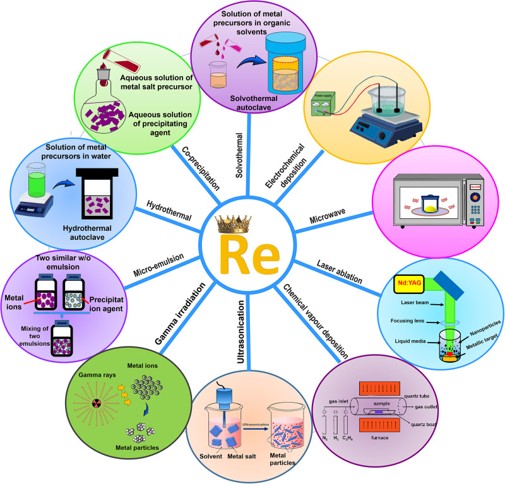
Fig. 1. Graphical illustration of various preparation method for Re nanomaterials.
Technology Overview
The technology focuses on diverse synthetic strategies to prepare Re nanostructures with controlled size and unique optical, structural, and catalytic properties. Key preparation methods include wet-chemical reduction, microwave processing, hydrothermal synthesis, and cold atmospheric pressure plasma. These techniques facilitate precise surface functionalization and the fabrication of high-performance Re-based alloys and nanocomposites.
Applications & Benefits
Re-based nanomaterials offer exceptional conductivity, high surface area, and variable oxidation states. They provide substantial benefits in rapid electrochemical sensing of biomolecules or pollutants, efficient organic catalysis, and high-capacity supercapacitors. Furthermore, their inherent plasmonic properties and cytotoxicity enable ultra-sensitive SERS detection and promising biomedical therapies, including tumor ablation and targeted radiotherapy.
Abstract:
With the rapid development of modern science and technology, it is necessary to search for alternative nanostructured materials towards the application of electrochemical (EC) sensors, catalysts, surface-enhanced Raman scattering (SERS) and biomedicine. However, such type of nanomaterials is limited due to the lack of synthesis procedures and unique set of physical and chemical properties. This review aims to provide insights into recent advances devoted towards synthesis and applications of rhenium (Re) nanostructures. Special attention has been focused on the synthesis of Re nanostructures with defined optical, structural, and catalytic properties based on the available literature studies. The integration of Re nanomaterials into various electrochemical devices with interest in the detection of biomolecules, drugs, organic pollutants, etc. is highlighted. Given that Re nanomaterials have a high specific surface area and surface energy, they are appealing as catalysts. The so-obtained Re nanomaterials are effective in various catalytic reactions with good recycling abilities. These materials are also considered ideal candidates for redox-type energy storage materials due to their superior intrinsic advantages such as structural, electronic, electro-optical and chemical properties, which are exceptional among other transition metal compounds (TMCs) investigated so far. The potential role of Re materials in photocatalytic degradation of methylene orange, methylene blue, rhodamine B etc., emphasizing the influence of various factors such as pH, concentration of dye, loading of photocatalyst, light intensity, irradiation time, etc. is discussed. The recent advancements in engineered ReNPs and its composites, particularly for SERS substrates, have been systematically surveyed. Because of its unique physical and chemical performance, ReNPs act as a remarkable diagnostics reagent candidate and show to improve its photoluminescence, lipophilicity, cell uptake, cytotoxicity, biological distribution, pharmacology, and toxicology. At the end of this review, we conclude by discussing the remaining challenges associated with the Re nanomaterials and our perspective on the future of nanoscience and nanotechnology. This review is the first to focus on various synthesis methods employed for the preparation of ReNPs, and its composites and highlight the development of electrochemical sensors, catalytic organic reactions, SERS and biomedical applications.

Recent trends and perspectives in rhenium-based nanomaterials for sustainable applications
Author:Veerakumar Pitchaimani, Pandiyan Rajaram, Chen Shen-Ming, Thanasekaran Pounraj, Saranya K.
Year:2025
Source publication: Coordination Chemistry Reviews, Volume 527, March 2025, 216382
Subfield Highest percentage: 99% Inorganic Chemistry #1 / 86