Detecting fake reviewers from the social context with a graph neural network method
This study proposes a novel graph neural network (GNN)-based framework for detecting spammers who originate fake reviews in discussion forums, utilizing realistic data.
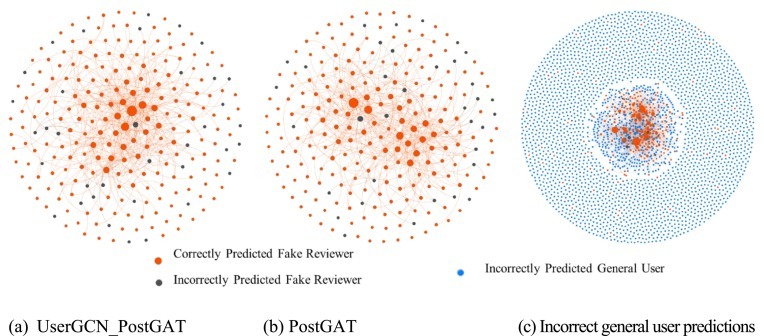
Fig. 9. Social network between fake reviewers.
Technology Overview
This study defined a social context network to illustrate posters‘ social interactions and their reviews. The proposed framework using various graph neural network techniques to analyze a combination of social context subgraphs for user representation. The proposed framework employs a two-layer architecture with focal loss to address the issue of imbalanced data classification. The proposed framework was evaluated using a realistic fraudulent review dataset.
Applications & Benefits
To develop a fake reviewer detection framework, we utilized a graph modeling module that learns the social context network for user representations. This module represents the social context network in various subgraphs, including a complete social context graph, homogeneous user–user subgraph, and heterogeneous user–post subgraph. The proposed framework employs a two-stage architecture with focal loss to address the issue of imbalanced data classification. The experiment was evaluated using a ground truth dataset collected from an actual fraudulent review event on a discussion forum.
Abstract:
With the development of mobile Web technologies, people can easily seek advice from social media before making purchases or decisions. Some companies employ expert writers to fabricate reviews or use automated techniques to improve the appeal of their products or services, or to undermine the credibility of their rivals. This obstructs the detection of fake reviews and reviewers. This paper proposes a novel graph neural network-based framework for detecting spammers, who originate fake reviews in discussion forums to capture information from different social network combinations in various subgraphs. These subgraphs include a complete social context graph, homogeneous user–user subgraph, and heterogeneous user–post subgraph. A novel two-stage architecture with focal loss was designed to create a training model. This model can be applied to solve the issue of imbalance data classification. The proposed framework was applied to evaluate a ground truth dataset collected from an actual fraudulent review event on a discussion forum. The experimental results show that this aggregate social context representation method can be effectively applied to detect fake reviewers.
Detecting fake reviewers from the social context with a graph neural network method
Author:Li-Chen Cheng, Yan Tsang Wu, Cheng-Ting Chao, Jenq-Haur Wang
Year:2024
Source publication:Decision Support Systems Volume 179, April 2024
Subfield Highest percentage:99% Arts and Humanities (miscellaneous) #6 / 630
https://www.sciencedirect.com/science/article/pii/S0167923623002257